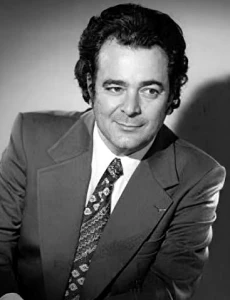
A note on sourcing: Vanzo (1928–2002) does not belong to the small company of crossover megastars who filled football stadiums or sold platinum albums; he belongs instead to a rarer and, in its own way, more embattled lineage — the specialist French lyric tenor, trained in and largely devoted to a national repertoire that the twentieth-century's Italian-dominated opera industry persistently treated as a picturesque sideline rather than a central tradition. The sections below on his "mass audience" and his "crossover" are drawn honestly from the real, documented contours of that career: his origins in French popular music-hall and operetta, his own compositions in that lighter vein, his championing of French opera on international stages that rarely programmed it, his broadcasts on French national radio and television, and the legendary 1965 Carnegie Hall evening that made him, briefly, a household name in New York. Where the historical record is thin — as it is for grand philanthropic gestures of the kind associated with later global superstars — this essay says so rather than inventing them. All facts, dates, and quotations are drawn from verified sources, including Wikipedia (English and French), historyofthetenor.com, operanostalgia.be, operavivra.com, and contemporary accounts of the 1965 American Opera Society season.
On the evening of April 20, 1965, Carnegie Hall filled with a curious and knowing crowd — the particular breed of New York opera devotee who turns out not for a guaranteed masterpiece but for a rarity, drawn that night by the American Opera Society's promise of a fully cast, formally dressed, minimally staged concert performance of a Donizetti opera that had not been heard in the city in living memory: Lucrezia Borgia, a lurid tale of poison, incest, and a mother's unwitting murder of her own son, composed in 1833 and all but abandoned to history's footnotes. The hall itself, with its gilded horseshoe tiers and its reputation as the most unforgiving acoustic in America — a space that flatters no voice that cannot fill it honestly — carried its own charge of expectation that evening, heightened by a last-minute crisis that had rippled through the city's small, gossip-hungry opera world in the preceding days. The mezzo-soprano originally engaged to sing the murderous title role had been forced to withdraw, and into the breach, with only days to prepare, stepped a thirty-one-year-old Catalan soprano named Montserrat Caballé, a singer who had spent nearly a decade in the provincial opera houses of Basel and Bremen, virtually unknown to the American public and, that night, unknown even to most of the audience filing into their seats. Beside her, in the tenor role of Gennaro — Lucrezia's abandoned, unrecognized son, the innocent instrument of the opera's tragedy — stood Alain Vanzo, a thirty-seven-year-old Frenchman already celebrated in Paris and London but making, that same evening, his own American debut in a role that would ask him to die, quite literally, in the arms of a soprano the world had not yet learned to listen for.
What happened over the next three hours has become one of the foundational legends of postwar opera: Caballé's voice, floated in pianissimo phrases of such creamy, seemingly infinite breath control that the hall's famously exacting acoustic seemed for once designed expressly to reward her, built across the evening into a sustained astonishment, until the final scene — in which Lucrezia, having unknowingly poisoned her own banquet guests, watches her son Gennaro succumb to the same wine and shrieks the opera's devastating revelation, "Era desso il figlio mio!", he was my own son — detonated the audience's disbelief into an ovation that ran, by multiple accounts, a full twenty-five minutes, an outpouring so sustained that it entered opera lore as the single night a career was created in real time before a live audience's eyes. Vanzo's Gennaro was inseparable from that alchemy: it was his death, sung with the same unforced sweetness and scrupulous French-trained diction that had already made him beloved in Paris, that gave Caballé's final aria its unbearable weight, and it was his voice, entwined with hers across the opera's darkening final scenes, that convinced a skeptical, rarity-hardened New York audience that they were witnessing something neither singer's résumé had promised. History has remembered that night chiefly as Caballé's overnight sensation, and rightly so — but for Vanzo, the evening served precisely the function Monte Carlo had once served for lesser-known singers of an earlier generation: it was the moment an American public, and by extension an international press corps hungry for the story of an unknown's triumph, first reckoned with the particular, understated authority of the French tenor tradition, carried that night by a man whose entire career would be built on the conviction that tenderness, honestly sung, could rival — and outlast — spectacle.
To understand the instrument Vanzo brought to that Carnegie Hall stage requires setting aside, at the outset, any expectation of the trumpeting, house-filling tenore di forza against which so much of Italian tenor history is measured. Vanzo was, by training and by temperament, a lyric tenor of the specifically French school — a tradition built not around raw decibel output but around what French pedagogy calls la ligne, the vocal line, and around an almost fanatical devotion to the clarity and musicality of the French language itself, a language whose nasal vowels, elided consonants, and absence of the open, forward-placed vowels that make Italian so naturally suited to operatic projection poses acoustic challenges that generations of non-French tenors have simply avoided by not singing French repertoire at all. Vanzo's own account of his training illuminates exactly how this instrument was built: after military service, he presented himself in Paris to the retired teacher Rolande Darcœur, who imposed on him a regimen of such severity that for an entire year he was permitted to sing nothing but scales and solfège — no arias, no repertoire, no public performance of any kind — a discipline aimed at establishing, before any expressive ambition was permitted to intrude, an absolutely even, unforced production across the full range of the voice. By the year's end, that discipline had carried him, without strain, to a ringing high E-flat, evidence that what had been built was not merely a set of learned tricks but a structurally sound instrument capable of sustaining decades of use.
The mechanics that followed from this foundation were exacting in their restraint. Contemporary listeners consistently described Vanzo's voice as "light" and "sweet" yet insisted, crucially, that it was never small in the pejorative sense — that it possessed, in one critic's formulation, excellent projection and could "easily fill the house" despite carrying none of the metallic squillo that Italian training prizes for cutting through a full orchestra. This was achieved through a technique of breath management that privileged sustained, evenly supported legato over sheer volume: Vanzo's phrasing moved through long melodic arcs without the audible seams, the gasped breaths, or the pushed climactic notes that betray a voice being driven beyond its natural capacity, and his famous elegance in shaping a diminuendo — allowing a sustained tone to fade toward silence while never losing pitch center or vibrancy — became, as it had for the great French tenors before him, a signature gesture reserved for moments of the deepest emotional exposure. Equally central was his obsessive fidelity to French prosody: critics singled him out repeatedly for "great taste in elaborating a musical line" and for a diction so exact that the poetry of Gounod, Massenet, and Bizet's librettists arrived at the listener's ear with its meaning, not merely its melody, intact — a technical achievement inseparable from artistic ones, since French vocal music of this era is built on the marriage of word and note in a way Italian bel canto, with its greater tolerance for pure vocalise, is not. And like his contemporary Alfredo Kraus, with whom he is repeatedly and instructively compared, Vanzo treated the pacing of his own career as an extension of technique itself: he did not attempt heavier Verdi repertoire before the age of forty, and he waited until forty-five — an age at which many lyric tenors have already begun to decline — to sing Don José in Carmen, a role whose sustained dramatic demands he judged his instrument unready to absorb until his technique had fully matured. This was not caution born of timidity but a rigorously calculated husbandry of finite resources, the same instinct that led him to decline a complete studio recording of Meyerbeer's punishing Le Prophète for CBS on the explicit grounds that the role exceeded what his voice could deliver without cost.
Three distinct eras structure the architecture of Vanzo's artistry, each revealing a different dimension of a voice built for tenderness rather than conquest. The first, and the one on which his early reputation was built at the Paris Opéra and the Opéra-Comique through the late 1950s and into the 1960s, comprised the great roles of French lyric and bel canto repertoire: Nadir in Bizet's Les pêcheurs de perles, Gérald in Delibes's Lakmé, and Edgardo in Donizetti's Lucia di Lammermoor, the role in which he appeared opposite Joan Sutherland's sensational 1960 Paris Opéra debut, a pairing that helped launch his own international visibility even as it cemented hers. In these roles, Vanzo's gift was one of profound emotional intelligence rather than vocal display: his Gérald found in Delibes's aching, exoticized melodic lines a wistful sincerity rather than mere prettiness, and his Edgardo — a role that in less disciplined hands collapses into either melodramatic bluster or anemic prettiness — balanced aristocratic wounded pride with genuine tenderness, nowhere more affectingly than in the tomb scene aria "Tu che a Dio spiegasti l'ali," sung, as always, with a reverence for the vocal line that never sacrificed clarity of feeling for beauty of tone alone. Reviewers of the period praised precisely this quality, calling him "a thoughtful, elegant, and expressive singer" whose interpretive taste distinguished him from tenors possessed of larger but less discerning instruments.
The second era carried Vanzo into the darker psychological terrain of French Romantic repertoire proper: Massenet's Werther and Manon, Gounod's Faust and Roméo et Juliette, roles built not around vocal spectacle but around the intimate charting of obsessive love, religious doubt, and self-destroying idealism. His Werther, the hypersensitive poet whose unrequited passion drives him to suicide, drew on exactly the vulnerable, unforced upper register that had been the product of his year of unglamorous scales, allowing the character's fragility to register as genuine rather than performed; his Faust, a role he sang at the Metropolitan Opera in 1976 in alternation with his old colleague Nicolai Gedda — the two tenors' careers had run in curious parallel since they shared a Paris Opéra stage as far back as November 1954 — demonstrated the same instinct for restraint applied to a figure whose bargain with the devil demands, in Vanzo's reading, more disillusioned melancholy than demonic swagger. Third, and most instructive of his willingness to defy expectation, came the deliberately heavier and more technically punishing repertoire of his later career: Verdi's Don Carlo at the Paris Opéra in 1968, Bizet's Don José finally undertaken at forty-five, and above all Berlioz's ferociously difficult title role in Benvenuto Cellini — a part studded with a stratospheric tessitura that has intimidated generations of lyric tenors and that Vanzo returned to repeatedly, in 1969, 1972, and again in 1982, proof that the young man who once spent a year on nothing but solfège had built, patiently, an instrument capable of expansion without ever sacrificing the essential sweetness that had always been its calling card. Skeptics who assumed a specialist in French tenderness could never survive Berlioz's punishing demands were answered not with argument but with two decades of documented, undiminished performance.
Vanzo's relationship to the broader public was shaped by a paradox specific to his national tradition: French opera in the mid-twentieth century occupied an oddly marginal position even within its own country's cultural hierarchy, treated internationally as a picturesque regional dialect standing outside the Italian and German mainstream that dominated the world's most prestigious houses, and Vanzo's career became, in effect, a decades-long campaign to prove that dialect a language of the first rank. He carried this repertoire — Gounod, Bizet, Massenet, Delibes, Berlioz — to stages that rarely programmed it as a matter of course: the Royal Opera House in London, the Vienna State Opera, the Gran Teatre del Liceu in Barcelona, the Teatro Colón in Buenos Aires, San Francisco's War Memorial Opera House, and eventually the Metropolitan Opera itself, functioning less as a guest star passing through than as an ambassador insisting, performance by performance, that French lyric opera deserved a permanent place in the international repertory rather than occasional, exoticized revival. At home, this same democratizing instinct expressed itself through France's own evolving mass media: Vanzo became a familiar presence on French national radio and, in his later years especially, on French television, where recitals and variety-adjacent appearances carried his voice into households that would never purchase an opera subscription, embedding the sound of Massenet and Gounod into the ordinary domestic soundscape in much the way earlier broadcast pioneers had done for their own national traditions.
Perhaps the single most symbolically resonant instance of this bridging function came in 1973, when Vanzo joined Mario del Monaco and a rising Luciano Pavarotti in a concert marking the centenary of Enrico Caruso's birth — an event that placed the specialist French tenor shoulder to shoulder with two titans of the Italianate tradition his entire career had, in its quiet way, argued against being treated as the singular measure of tenor greatness. That such a gathering was conceivable at all, broadcast and reported to audiences far beyond the opera-subscribing public, testified to a genuine loosening, across the 1960s and '70s, of the rigid national and stylistic boundaries that had once confined "great tenor" almost exclusively to Italian exemplars; Vanzo's presence on that stage was itself a quiet act of paradigm-breaking, an implicit argument, delivered without polemic, that greatness in this art form was not the exclusive property of one national school. It is worth stating plainly that Vanzo never filled a stadium or commanded the platinum-selling crossover audience of the superstars who followed a generation later — his was not that kind of fame — but within the specific, real terms of his own career, he did something arguably harder: he forced open a door for an entire underrepresented national tradition, insisting, night after night in houses that had rarely bothered to program his repertoire, that the French tenor voice belonged in the same conversation as its more celebrated Italian and German cousins.
Long before Vanzo entered a conservatory, he had already lived the life of a popular entertainer: as a teenager during and after the Second World War, self-taught on accordion, piano, and drums, he formed his own small band and played popular songs at local dances, and his earliest professional footing in Paris came not on an opera stage but as an understudy, during the 1951–52 season at the Théâtre du Châtelet, to Luis Mariano, the reigning idol of French operetta and music-hall — a genre built on melody, sentiment, and unabashed popular appeal rather than academic rigor. This origin left an indelible mark on his mature career, and rather than disowning it as an embarrassing prelude to "serious" art, Vanzo returned to it deliberately and repeatedly. He composed and staged his own operetta, Pêcheur d'étoiles, premiered in 1972, and later a full lyric opera, Les Chouans, mounted in Avignon in 1982, alongside a Mass — the work of a man who never accepted the purist's assumption that popular, melodic, unashamedly accessible music-making stood beneath the dignity of a Paris Opéra leading tenor. His 1971 complete recording of Franz Lehár's operetta Le Pays du sourire (The Land of Smiles), in which he created the role of Sou-Chong, became by some accounts his single most representative and beloved recorded performance — direct evidence that a genre many of his more doctrinaire colleagues would have refused as beneath a serious artist could, in Vanzo's hands, become a career-defining achievement rather than a guilty indulgence.
His most consequential collaboration, examined from a different angle than the historic-turning-point framing above, was his sustained artistic partnership with Montserrat Caballé, which extended well beyond that single Carnegie Hall evening into further performances and recordings that helped cement both singers' international standing; there is a particular grace in the fact that the tenor most secure in his own understated authority was also the one standing beside a genuinely unknown colleague on the night the world discovered her. On the matter of philanthropy in the specific sense associated with later global superstars — the founding of charitable foundations, the headline benefit concerts for famine relief or disaster recovery — the documented historical record for Vanzo is genuinely thin, a fact this essay records honestly rather than papering over with invented gestures; his generosity expressed itself instead in the currency available to a working artist of his era and stature: collegial partnership that elevated others, a willingness to share stages with singers on the way up rather than only with established peers, and a lifelong, undiminished championing of a national repertoire that had no other advocate of comparable prominence. His own reported greatest regret — that he never had the chance to sing alongside Maria Callas — speaks to an artist who understood collaboration itself, the meeting of voice with voice, as opera's deepest currency.
For the French lyric tenors who have followed him, Vanzo's discography — spanning Gounod, Massenet, Bizet, Delibes, Berlioz, Donizetti, and Lehár, much of it preserved on the complete studio recordings that flourished during the 1960s and '70s recording boom he helped make commercially viable for French repertoire — now functions as both inheritance and challenge. A young tenor approaching Nadir's "Je crois entendre encore" or Gérald's flower-song lament in Lakmé inherits not a blank interpretive slate but a recorded benchmark of taste, diction, and unforced legato so exacting that it exposes, with unforgiving clarity, any imprecision in French vowel placement or any impatience with the long, unhurried melodic line that repertoire demands; Vanzo's example teaches, more explicitly than perhaps any other tenor of his generation, that mastering French opera requires a wholly distinct discipline from mastering Italian opera, one that cannot simply be borrowed from the Verdi-and-Puccini training that dominates most conservatory curricula. His decades-long insistence on carrying French repertoire to international houses that rarely programmed it, moreover, helped establish the template that later generations of specialist singers — and later record labels seeking to document underperformed national traditions — would follow, embedding the conviction that a nation's operatic patrimony deserved international circulation on its own terms rather than only as an occasional novelty slotted between Verdi revivals.
What, in the end, did Alain Vanzo bequeath to the human experience? He offered, across nearly five decades of unforced, patiently cultivated singing, proof that an art form's deepest truths do not require the largest instrument to be told — that a fisherman's yearning, a poet's despair, a doomed son's final breath in his unknowing mother's arms could be rendered not through vocal conquest but through the accumulated honesty of technique disciplined toward tenderness rather than toward power. He carried, almost single-handedly among his generation's most visible tenors, the argument that the French language itself could sing with as much authority as Italian's more naturally sonorous vowels, if only a voice were trained with sufficient patience and reverence to make that argument audible; and he proved, on one unforgettable April night at Carnegie Hall and across thousands of quieter performances in Paris, Vienna, London, and Buenos Aires, that elegance and restraint are not the absence of greatness but one of its rarest and most enduring forms. Long after the specific grain of his voice has receded into archival recording, what remains is the example of an artist who never mistook gentleness for weakness, who built, scale by patient scale, an instrument that could die tenderly opposite a stranger who would become one of opera's great sopranos, and who insisted, to the last, that a whispered French phrase, perfectly weighted and perfectly true, could move the world as completely as any thunder — the immortal, quietly radiant bequest of the last prince of the French lyric stage.


