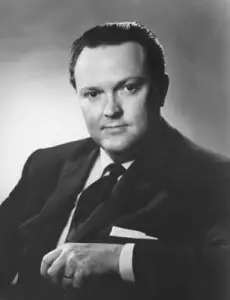
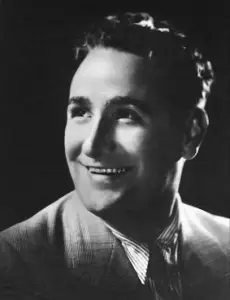
The house lights of the Bayreuth Festspielhaus dim with a particular kind of silence — the silence of a pilgrimage completed, of thousands of devotees who have crossed continents to sit on hard wooden benches inside a temple built by Wagner himself for the worship of sound. It is the summer of 1965, and on the raked, unadorned stage that Wagner designed to eliminate every visual distraction from the music, a broad-shouldered young baritone named Hermann Prey stands as Wolfram von Eschenbach, the knight-poet of Tannhäuser, about to sing the aria that will define the second half of his life: "O du mein holder Abendstern," the Ode to the Evening Star. The Festspielhaus is famous for its covered orchestra pit, a sunken, mystical abyss that Wagner concealed precisely so that no mechanical intermediary would come between the singer's voice and the listener's soul, and in that architecture of pure acoustic communion, Prey's voice rises — not as a shout, not as a display of muscular power, but as something closer to confession. The audience, connoisseurs who could detect the faintest wobble or the slightest strain, hears instead a voice of impossible evenness, warm as aged wood, floating above the hushed strings with the patience of a man speaking a private prayer aloud. This was Prey's Bayreuth debut, and by the time the final note dissolved into the rafters, something had shifted permanently in the hierarchy of German vocal art. He was not dethroning the reigning giants of the Fach — this was not a coup, but a quiet coronation, achieved without a single ounce of bravado, in a house where subtlety could be heard from the very last row. Wagner himself had written that the ideal singer should be swallowed by the drama rather than stand outside it, performing at it, and Prey's genius on that stage was his total absorption into Wolfram's melancholy, his refusal to sing the aria as a party piece extracted from its context. In the years that followed, his return to Bayreuth in 1966, 1967, and again in the 1980s as Sixtus Beckmesser would only deepen the legend, but it was that first ascension — a young man from bombed-out Berlin standing in the composer's own hallowed hall and making an audience of skeptics fall utterly silent — that marked the historic turning point when Hermann Prey ceased to be merely a gifted singer and became, irrevocably, a legend of the German stage.
To understand why Prey's voice produced such an effect, one must abandon the popular, unsophisticated notion that vocal greatness is measured in decibels. Prey possessed what vocal pedagogues call a lyric baritone of medium weight, and by his own account and the testimony of critics who heard him across five decades, his instrument was not the largest in his generation — contemporaries could out-power him in raw volume — yet none could match the seamlessness of his passaggio, the treacherous bridge between chest voice and head voice where lesser singers audibly crack, strain, or resort to an ugly, breathy cover. Prey's technique, rooted in his training under Günther Baum and the veteran bass-baritone Jaro Prohaska at Berlin's Hochschule für Musik, emphasized breath economy over brute diaphragmatic force: a controlled, almost miserly release of air across the vocal folds that allowed him to spin impossibly long phrases without the telltale sag in pitch that betrays a singer running out of support. Critics consistently noted that his tone was darker and deeper-sounding than his slightly older contemporary Dietrich Fischer-Dieskau, but equally refined and equally capable of soaring into the tenor range without the smallest suggestion of vocal effort — a remarkable technical feat, since ascending into that register typically requires a visible gear-change even from accomplished singers, yet Prey's transition was engineered to be acoustically invisible, the vocal equivalent of a bridge whose seams cannot be found. This apparent effortlessness was not luck; it was the product of a placement technique that kept the resonance forward and bright even in the lower-middle voice, preventing the darkening and thickening that typically accompanies a baritone's push into higher tessitura. Where Fischer-Dieskau, his great rival and frequent point of comparison, famously dissected text with an almost forensic, word-by-word intensity, Prey's technical philosophy operated on the level of the architecture of the entire phrase — observers noted that Fischer-Dieskau gives each word and phrase an individual importance whereas Prey allowed the whole composition to unfold as an entity, a structural, almost symphonic approach to line that demanded extraordinary breath management and a rare gift for pacing rubato without ever losing the underlying pulse. His comic technique, meanwhile, required an entirely different mechanical skill set: rapid-fire diction married to unimpaired tone, the ability to articulate patter passages in Rossini or Mozart at velocity while never sacrificing pitch center — what voice teachers call agility without loss of core. It was this synthesis of forward placement, breath discipline, structural phrasing, and comic dexterity that constituted the true mechanics of his genius, a technical apparatus built not for spectacle but for the illusion of effortless, natural speech elevated into song.
Prey's early career was built upon an emotional intelligence that allowed him to inhabit roles of profound psychological subtlety without ever over-singing them, and nowhere was this clearer than in his interpretation of Mozart's Count Almaviva and, above all, Figaro — a role he made so thoroughly his own that he came to be regarded, alongside his Rossini counterpart, as one of the defining Figaros of the postwar era, particularly excelling in Mozartian roles and German art song that showcased both vocal warmth and theatrical wit. His Papageno, the bird-catcher of Die Zauberflöte, became legendary for its combination of childlike wonder and genuine comic pathos, a portrayal so beloved that he shared media-celebrity with Fritz Wunderlich until the latter's early death, often playing Papageno to Wunderlich's Tamino, the two artists forming one of the most cherished partnerships in postwar German opera before Wunderlich's tragic accidental death in 1966 severed it forever. Yet Prey's second great achievement lay in the recital hall rather than the opera house, where his interpretations of Schubert's song-cycles — Die schöne Müllerin, Winterreise, and Schwanengesang — revealed an interpreter capable of tracing an entire emotional arc across twenty or more linked songs, sustaining narrative tension through subtle shifts of color rather than theatrical exaggeration, a discipline he would later formalize by founding the Schubertiade festival in Hohenems in 1976, an institution dedicated to the life and works of the Austrian composer Franz Schubert that became a pilgrimage site for lieder devotees. As his career matured, Prey made a calculated and courageous pivot away from the comic and lyric roles that had built his reputation and toward the punishing demands of Wagnerian repertoire, a genre that had claimed the vocal health of countless baritones who attempted it without adequate preparation. Rather than attempting the heaviest Wagnerian parts, he shrewdly selected roles suited to his particular instrument — Prey limited his Wagner to the soft, high-baritone roles Wolfram and Beckmesser — a decision that allowed him to conquer Bayreuth without sacrificing the tonal beauty that was his signature. His late-career assumption of Beckmesser in Die Meistersinger von Nürnberg, a role traditionally played as a one-dimensional comic villain, became perhaps his most artistically daring transformation: rather than caricature, Prey brought an emotional complexity and light-on-the-feet comic grace, which made Beckmesser endearing, a reinterpretation so persuasive that he was still performing the role at the Metropolitan Opera as late as 1993, decades after most singers of his generation had retired. This arc — from the golden comic charm of Papageno and Figaro, through the confessional lyricism of Schubert, to the psychologically shaded villainy of Beckmesser — represents one of the most intelligently managed vocal evolutions in modern operatic history, a career built not on chasing size but on cultivating longevity through wisdom.
What separated Prey from the merely excellent was his refusal to accept that opera and lieder belonged exclusively to a cloistered elite gathered in velvet-lined halls. In an era when German classical music risked calcifying into museum culture, Prey made the audacious decision to bring his art directly into the nation's living rooms, and he became a fixture of German television in a way virtually unprecedented for a serious classical artist: he sang operetta and performed on German television, becoming extremely popular with television audiences, transforming himself from a specialist's darling into a genuine national celebrity recognized far beyond the subscriber base of the opera houses. This was not a dilution of his artistry but a deliberate sociological intervention — a conviction, evident throughout his public statements, that the German lied and the German comic opera were not relics to be preserved behind glass but living, breathing expressions of ordinary human feeling that deserved to be heard by bricklayers and schoolteachers as readily as by aristocrats and critics. His television appearances, often blending accessible commentary with full performances, functioned as an ongoing public masterclass, demystifying repertoire that many Germans had been taught to regard as forbiddingly intellectual. Abroad, his instinct for cultural bridge-building manifested in his tireless touring: he became, by his own account, a titan of the American recital circuit, having sold out Carnegie Hall twice with no subscription, nothing, just box office — a striking commercial validation of an art form that skeptics insisted could not fill houses on ticket sales alone. He was equally beloved in Japan, where Western classical singers of his generation rarely achieved anything approaching mass popularity, and his multi-decade advocacy for the American lieder recital, a form he insisted on nurturing even in unlikely venues, helped seed a durable appetite for German song across the Atlantic. Perhaps most tellingly, when he brought a Schubert cycle to an American audience in a city with no prior tradition of the form, he recalled with evident astonishment that it was the first time ever that somebody sang a Schubert cycle in that city, and the hall was full — a fabulous audience, evidence that his reputation alone could summon curious first-time listeners into a genre they had never previously encountered. In this way, Prey did not merely perform for the public; he manufactured new publics, converting the passively curious into devoted converts of an art form long assumed to be dying.
Prey's populist instincts occasionally provoked the disapproval of purists who believed that a serious operatic voice should never wander toward musicals, operetta, or popular idioms, yet Prey approached these excursions with characteristic candor rather than embarrassment, acknowledging in a late-career interview that he had sung many musicals and operettas, though he eventually gave them up, invoking the old German proverb about the shoemaker sticking to his own last as a wry, self-aware commentary on the perils of straying too far from one's core discipline. Yet even as he counseled caution about wholesale genre-crossing — noting skeptically that he did not know a single outstanding classical singer who had built a lasting career as a pop singer — his own willingness to experiment with operetta on television, to found accessible festivals, and to mentor younger artists demonstrated that he believed firmly in music's capacity to travel across supposed boundaries of taste and class, provided the crossing was made with integrity rather than opportunism. His collaborations with the pianists of his era read like a who's-who of twentieth-century accompanists: his partnership with Karl Engel, spanning from the 1950s through the 1980s, produced extensive recorded cycles by Schubert and Schumann, including benchmark recordings of Dichterliebe and Liederkreis, while his work with the legendary Gerald Moore, notably their traversal of the complete Mörike-Lieder by Hugo Wolf in the early 1960s, produced recordings still cited today as models of natural, unforced elegance. Beyond the recording studio, Prey's late-career decision in 1982 to begin teaching at the Musikhochschule Hamburg reflected a philanthropic instinct directed not toward headline-grabbing charitable causes but toward the quieter, generational work of transmission — ensuring that the interpretive wisdom he had accumulated across four decades would not vanish with him but would instead be passed, phrase by phrase, breath by breath, into the throats of the next generation of German singers. His founding of the Schubertiade was itself a philanthropic act in the truest sense: an institution built not for personal profit but for the preservation and democratization of a repertoire he loved, ensuring its survival long after his own voice fell silent — indeed the festival endures today, continuing under its longtime artistic director and approaching a fiftieth anniversary that stands as a living monument to Prey's founding vision.
To listen to Hermann Prey today, decades after his death, is to encounter a voice that functions simultaneously as inspiration and intimidation for every young baritone who dares approach the German repertoire he claimed as his own. His recordings — the Schubert cycles with Engel, the Wolf songs with Moore, the indelible Papageno opposite Wunderlich, the late, wounded elegance of his final Schwanengesang performances — constitute a pedagogical benchmark against which conservatory students are still measured, an almost impossibly high bar of naturalness and technical security that reveals, by painful contrast, every strain and affectation in a lesser singer's approach. His pioneering embrace of television broadcasting anticipated, by decades, the democratizing logic that would eventually govern the entire distribution of classical music: the recognition that an art form survives not by guarding its gates ever more jealously but by walking boldly through the very doors that separate the concert hall from the ordinary living room, a lesson that streaming platforms and digital archives have only extended, never invented. Prey died as he had lived, still performing, having given a concert only days before his fatal heart attack in the summer of 1998, at the age of sixty-nine, having devoted forty-six years to an international career as an acclaimed singer of lieder and opera that never once slackened in its commitment to communicating directly, honestly, and warmly with an audience. What, in the end, did Hermann Prey's art mean to the human experience? It meant that vulnerability could be a form of virtuosity, that warmth could carry as far into the darkened recesses of a great hall as sheer power ever could, and that the ancient, embattled tradition of German song — so easily reduced to austere philology or museum-piece reverence — could still, in the hands of the right artist, sound like a man speaking directly and tenderly into the ear of every single person listening. His voice, forever preserved on disc and tape, remains an evening star of its own: distant now, yet still burning with a steady, undiminished light, guiding new generations of singers and listeners toward the same simple, radical truth he spent his whole life proving — that the human voice, disciplined by craft and warmed by feeling, remains one of the most immortal instruments the world has ever known.