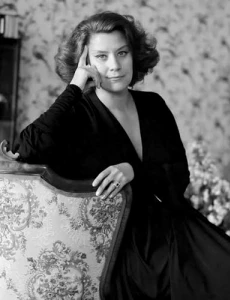
On the evening of December 7, 1977 — the feast of Sant'Ambrogio, the immovable date on which Milan's Teatro alla Scala has opened its season since time immemorial — the golden horseshoe of boxes filled with a tension that had nothing to do with ordinary opening-night nerves. This was no ordinary season. It was La Scala's two-hundredth anniversary, the bicentennial of the house that had given the world Verdi's own premieres, and the opera chosen to mark it was Verdi's own vast, doom-laden Don Carlos, conducted by the young and exacting Claudio Abbado, with a cast — José Carreras, Mirella Freni, Nicolai Ghiaurov, and the Russian bass Evgeny Nesterenko — assembled with the deliberate grandeur of a coronation. And standing among them, in the role of the tormented Princess Eboli, was a thirty-eight-year-old mezzo-soprano from Leningrad, a city that had itself only three decades earlier been reduced to frozen rubble and starvation by the same historical current that had, in its Cold War afterlife, made her presence on that stage a small geopolitical miracle. The loggione — La Scala's famously merciless upper gallery, self-appointed guardians of Verdian tradition — watched her with the narrowed eyes reserved for outsiders daring to claim a birthright not their own; a Soviet artist, trained in a system the West regarded with suspicion bordering on contempt, had been entrusted with one of the most punishing and beloved mezzo roles in the entire Italian canon, on the single most scrutinized night of the operatic calendar, in the house that considered itself the last word on how Verdi should sound.
Then came the fourth act, and "O don fatale" — Eboli's ferocious, self-lacerating aria in which she curses the very beauty that has ruined her life and the lives of everyone she loves — and the house discovered, in real time, that the outsider had not merely met the moment but annexed it. Obraztsova's voice, when it opened into that aria's exposed, unaccompanied top phrases, possessed a color unlike anything the loggione had catalogued before: a chest register of almost frightening depth and weight, fused without a seam into a top that rang out over Abbado's orchestra like struck bronze, the whole instrument charged with a specifically Russian intensity of feeling that made Eboli's self-hatred feel less like an aria than a confession torn out under duress. The ovation that followed did not merely applaud a performance; it dissolved, for a few extraordinary minutes, the entire ideological architecture the Cold War had built between the house and the singer. Critics who had arrived prepared to file skeptical notices instead reached for superlatives, and within days the story of the Soviet mezzo who had conquered La Scala on its own bicentennial night had traveled from Milan's newspapers to Moscow's, cementing Elena Obraztsova, in a single evening, as one of the defining vocal artists of her generation — the first indisputable proof that the loneliest, most punishing corner of the mezzo repertoire had found, in her, a voice built expressly to inhabit it.
To understand what the loggione heard that night, one must first understand the extraordinary and, in the purely physiological sense, almost unfair instrument Elena Obraztsova had spent two decades assembling. She belonged to the rarest and most demanding of vocal categories: the true dramatic mezzo-soprano, a Fach defined not merely by range but by an instrument capable of sustaining, across nearly three octaves, the kind of orchestral-scale volume and unbroken tonal richness that most singers can produce only in isolated registers. Where a lighter mezzo might color her lower notes for dramatic accent and retreat quickly to a brighter, safer middle voice, Obraztsova's chest register was not a special effect but a structural foundation — a genuinely enormous, dark, almost baritonal weight of sound that she could sustain for entire phrases without strain, and, more remarkably, could carry upward into her middle and upper registers without the audible "gear change," the register break, that betrays even accomplished singers. Critics who heard her repeatedly across the 1970s and 1980s converged on the same vocabulary: an "incredible technique," a voice of near-frightening amplitude that nonetheless never curdled into shouting, and a chest voice so vast that more than one commentator likened her lower register to that of a true contralto grafted seamlessly onto a soprano's ringing top.
The discipline behind this fusion was rigorously Russian in its foundations. Trained first in the provincial conservatories of Taganrog and Rostov-on-Don before her decisive years at the Leningrad Conservatory from 1958, Obraztsova absorbed a pedagogical tradition that prized breath support engineered from the deepest muscles of the torso rather than the throat, treating the entire body as a resonating column rather than isolating the vocal folds as the sole engine of sound. This is precisely why her instrument could produce such scale without the wear that destroys lesser dramatic voices by middle age: the effort was distributed, structural, architectural, rather than concentrated in a single vulnerable point. She then layered onto this Russian foundation an Italianate sensitivity to legato and word-coloring, allowing her to move between the declamatory, speech-rooted vocal writing of Mussorgsky and the long, sculpted Verdian line without sounding like two different singers. Listen to her execute the plunging octave drops and sudden dynamic reversals of "O don fatale," or the serpentine chromatic seduction of Carmen's Habanera, and what emerges is not brute force but focus — an emotional and acoustic concentration so total that the voice's sheer size became, paradoxically, an instrument of intimacy, capable of frightening a listener in the back row of a four-thousand-seat house with what felt, in the moment, like a whispered secret.
Obraztsova's repertoire crystallizes into three interlocking eras, each testing a different facet of that extraordinary instrument. The first is her guardianship of the great Russian mezzo roles that formed her earliest and most instinctively personal repertoire: Marina Mniszech in Boris Godunov, the role of her Bolshoi debut in 1963 at just twenty-four; Marfa, the tormented Old Believer of Mussorgsky's Khovanshchina; and, spanning nearly her entire career into her final decade, the ancient Countess of Tchaikovsky's The Queen of Spades, a role she carried for almost forty years and returned to as artistic director of St. Petersburg's Mikhailovsky Theatre after 2007. In these parts, Obraztsova displayed a reverence for the Russian text's speech-rhythms that no Western-trained singer could easily replicate, treating Mussorgsky's jagged, prose-like vocal lines not as melody to be beautified but as psychological truth to be honored exactly as composed — an emotional intelligence about pacing that let her Marfa's prophetic visions and the Countess's spectral terror land with documentary rather than merely operatic force.
The second era is her conquest of the high Verdian mezzo canon that carried her name across the West: Eboli in Don Carlos, Amneris in Aida, Azucena in Il trovatore. Here she navigated repertoire that demanded a different kind of intelligence — not the intimacy of Russian declamation but the architecture of long-form Italian tragedy, in which a single aria must justify an entire evening's suffering. Her Amneris, jealous and ultimately shattered, became a fixture from her mid-1970s American tours onward, praised for a scale of vocal and emotional commitment that made the Judgment Scene's final "Numi, pietà" feel less like a set-piece than a genuine collapse.
The third era, and the one that most defied skeptics, was her deliberate move into repertoire many assumed her monumental instrument could never suit: the sensual, mercurial title role of Bizet's Carmen, which the fastidious conductor Carlos Kleiber himself chose her to sing opposite Plácido Domingo in Vienna, and which Franco Zeffirelli filmed with her in 1978. Purists doubted that a voice built for Eboli's fury could convey Carmen's coquettish danger; Obraztsova answered by lightening her attack without surrendering an ounce of her chest voice's authority, proving — as she put it in her own characteristically unguarded philosophy, "I've never said 'no' to any conductor or director" — that her instrument's true genius lay not in its size alone but in its almost limitless adaptability.
Obraztsova's career unfolded almost entirely within the geopolitical vise of the Cold War, and her significance lies as much in what her presence accomplished sociologically as in what her voice accomplished musically. Within the Soviet Union, opera had long occupied a peculiar dual status: officially exalted as a pinnacle of state-sponsored high culture, yet functionally remote from the daily lives of the citizens in whose name that culture was administered. Obraztsova, broadcast relentlessly on Soviet state television and radio from the late 1960s onward, became one of the figures who collapsed that distance — a Leningrad siege survivor whose voice, filling millions of ordinary apartments through the crackle of a state radio broadcast, made the Bolshoi's gilded proscenium feel, for a few minutes, like communal property rather than an institution reserved for the party elite and foreign dignitaries.
Beyond Soviet borders, her breakthroughs at the Metropolitan Opera in 1976 and at La Scala's bicentennial the following year did something rarer still: they forced a Western public conditioned by decades of propaganda to encounter Soviet artistry not as an abstraction or a diplomatic gesture but as an overwhelming, undeniable physical fact, delivered live and at full voice. Franco Zeffirelli's decision to build his 1978 television film of Carmen and his 1982 cinema release of Cavalleria rusticana around her — followed by her Emilia in his star-studded 1986 Otello film alongside Domingo — carried that fact still further, placing a Soviet mezzo's face and voice into cinemas and living rooms across the capitalist world at the height of superpower rivalry. These were not marginal broadcasts; they were mass-media events engineered for audiences who had never bought an opera ticket in their lives, and their success demonstrated, on both sides of the Iron Curtain simultaneously, that the emotional force of a great voice could travel further and faster than any ideology built to contain it.
Obraztsova's appetite for popular and cross-disciplinary collaboration unsettled purists who expected a singer of her monumental stature to guard her repertoire with aristocratic exclusivity. She instead treated Zeffirelli's cinema, Kleiber's unconventional casting choices, and eventually even the informal variety-show format of her own celebratory concerts as opportunities rather than compromises. Her seventieth-birthday gala in 2009 typified this instinct: rather than a solemn recital of arias, the evening wove together ballet, film clips, jazz performance, and piano recital alongside operatic excerpts, a program that would have scandalized the guardians of Soviet cultural hierarchy a generation earlier but which Obraztsova, by then a Hero of Socialist Labour and one of the most decorated artists in Russian history, staged without a trace of defensiveness. Critics who had once questioned whether her Wagnerian scale of instrument belonged anywhere near Bizet's flirtatious Carmen were, by the 1980s, forced to concede that her willingness to cross those boundaries had produced some of the most celebrated recordings and broadcasts of her career.
This same expansiveness extended into philanthropy and pedagogy in her final two decades. Rather than retreating from public life as her voice matured past its dramatic peak, Obraztsova founded her own cultural center and an international academy of music in St. Petersburg dedicated to training young soloists, and established an international vocal competition bearing her own name to identify and support emerging singers from Russia and abroad — an institutional legacy explicitly designed to extend her artistic values to generations she would never personally hear sing. It is worth noting, in the interest of a complete portrait, that her position as one of the Soviet Union's most publicly celebrated artists was not without its costs and compromises; she was among the signatories of a 1974 letter condemning colleagues Mstislav Rostropovich and Galina Vishnevskaya for their support of the dissident writer Aleksandr Solzhenitsyn, a decision that later biographers have read as the price extracted from artists who wished to keep singing on the largest stages the Soviet state controlled. That complexity does not erase the genuine democratizing force of her artistry, but it is part of the fuller human portrait of a woman who spent her life negotiating, not always comfortably, the space between individual conscience and the vast cultural machinery that had made her famous.
Today, Elena Obraztsova's recorded legacy — the 1977 La Scala Don Carlos under Abbado, the Vienna Carmen alongside Domingo under Kleiber's baton, decades of Melodiya and Deutsche Grammophon recordings of the Russian and Verdian repertoires alike — functions as an intimidating benchmark against which every subsequent dramatic mezzo-soprano is, whether she acknowledges it or not, still measured. A young singer approaching "O don fatale" or the Habanera inherits, however indirectly, interpretive choices first fixed by Obraztsova's fusion of Russian vocal architecture and Italian lyrical instinct; a young singer approaching the Countess in The Queen of Spades studies a role Obraztsova sang across nearly four decades and thereby definitionally aged into, leaving behind a documentary record of how that terrifying character should evolve across a singer's own artistic lifetime. Her early and comfortable embrace of Zeffirelli's opera films — mass-distributed cinema events built around a serious operatic artist rather than a novelty — helped establish, well before the era of satellite broadcasts and streaming platforms, the template by which today's high-definition cinema transmissions and digital archives now carry opera to audiences the traditional house could never physically hold.
What, in the end, did Elena Obraztsova give to the human experience? She gave the world proof that catastrophe and grandeur could share a single lineage: a child who survived the starvation of the Leningrad siege grew, within three decades, into a voice capable of filling La Scala's gilded vastness with a sound that seemed to rise from the earth itself, dark as the frozen Neva and warm as the flame that outlasted it. Her instrument was an argument made flesh — that the human voice, disciplined into architecture rather than mere volume, could carry the full weight of a century's suffering and still find, at its summit, the tenderness to make a stranger in the back row weep for a fictional princess's ruined love. Long after the specific timbre of that extraordinary chest voice has receded into archival tape and grainy broadcast film, the truth her artistry insisted upon endures undiminished: that genius, wherever it is born — in a besieged city, behind an iron curtain, against every wager the century placed on its destruction — will find its way, sooner or later, to the stage where it belongs, and once there, will not be silenced.


