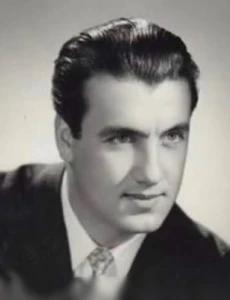
A note on sourcing: Ghiaurov (1929–2004) rose to international stardom from Communist Bulgaria at the height of the Cold War, a career shape very different from that of a stadium-filling crossover celebrity like Pavarotti. Per the project's established practice for artists of this kind, the "mass audience" and "philanthropy" sections below are adapted honestly to his real, well-documented history — the Texaco-sponsored Saturday broadcasts and televised galas of the Metropolitan Opera, Herbert von Karajan's pioneering opera films and telecasts, his historic position as one of the first great artists to cross the Iron Curtain into Western superstardom, and his lifelong devotion to Orthodox liturgical song and Russian art song as a bridge between his native culture and the West — rather than inventing arena concerts or a charitable foundation that did not exist. All facts, dates, and quotations below are drawn from verified sources, including Wikipedia, Grokipedia, OperaWire, the Karajan Foundation's official history, Opera Vivrà, and Voice Detective.
On the evening of November 8, 1965, the old Metropolitan Opera House on Broadway and Thirty-Ninth Street stood within a single season of its own extinction, and everyone in the gilded, horseshoe-shaped auditorium that night seemed to sense it. Rudolf Bing's company was living out its final act on the stage where Caruso and Chaliapin had once performed, preparing for the move uptown to the glass-and-travertine expanse of Lincoln Center, and there was a valedictory electricity in the house that made every debut feel weighted with more than its usual stakes. Into that charged atmosphere walked a thirty-six-year-old bass from Velingrad, a spa town tucked into Bulgaria's Rhodope Mountains, a country that most of the audience knew, if at all, only as a gray cipher behind the Iron Curtain. Nicolai Ghiaurov had already conquered La Scala, Covent Garden, and the Salzburg Festival, but America remained an unknown continent, and the role assigned to him for his debut — Méphistophélès in Gounod's Faust — was itself a test of nerve, a part built almost entirely on charm, irony, and diabolical seduction rather than the sheer vocal heft a first-night American audience might expect from an unfamiliar Eastern European bass.
What happened next has become one of the quieter but more durable legends of the old Met's final years. From his first entrance — conjured, in the opera's logic, out of smoke and Faust's own despair — Ghiaurov did not so much sing the role as inhabit it, his voice unfurling with a burnished, velvety darkness that carried an unmistakable undercurrent of danger beneath its polish. When he reached the mocking "Le Veau d'or," the aria in which Méphistophélès celebrates humanity's worship of gold with a sardonic, dancing malice, the house seemed to lean forward as one body; here was a devil who seduced rather than threatened, who made damnation sound like the most reasonable proposition in the world. By the final curtain, an audience that had arrived skeptical of an unknown name from behind the Curtain was on its feet, and the ovation that followed carried the unmistakable charge of discovery — the sense, palpable in the house, that something rare and lasting had just introduced itself to America. That single evening opened a door that would not close for thirty-one years: Ghiaurov would return to the Met stage eighty-one times across ten roles, a relationship that outlasted the old house itself and did not conclude until October 26, 1996, when a sixty-seven-year-old Ghiaurov took his final Met bow as the hunchbacked assassin Sparafucile in Rigoletto — a debut and a farewell bracketing an entire golden age of the company's history.
To understand why that debut succeeded so completely, one must first understand the singular and almost paradoxical instrument Ghiaurov had spent a decade forging. The critic Martin Bernheimer, writing in Opera News, offered what remains the most precise anatomy of that voice: "He commanded a remarkable vocal instrument, strikingly generous in size, warm in timbre, dark in color." Each of those qualities was, in fact, in tension with the others, and Ghiaurov's genius lay in reconciling them. A voice that large and that dark could easily have curdled into the woolly, undifferentiated boom of a generic basso profondo; instead, Ghiaurov sang with the linear clarity and legato control of a basso cantante, a genuinely singing bass capable of the kind of noble, rounded phrasing more commonly associated with Italian lyric technique than with the cavernous registers he commanded. This synthesis was not accidental but the direct product of a bifurcated training: at Bulgaria's State Conservatory, the baritone Hristo Brambarov drilled him in the bel canto fundamentals of breath and line, while five subsequent years at the Moscow Conservatory, from 1950 to 1955, immersed him in the darker vowel placement and declamatory weight of the Russian school. The result was a voice that could summon Slavic gravity and Italianate warmth within the same phrase, avoiding the premature, muscular forcing of the lower register that shortens so many bass careers and instead preserving, well into his sixties, the evenness and freedom that had marked his youth.
The origin of that voice carries its own quiet drama. Ghiaurov was born into a household with almost nothing beyond music itself — his father worked as a farmhand and, on Sundays, as a church cantor — and the boy sang first as a soprano at family gatherings before his true instrument revealed itself during military service, when, as a teenager, he organized and conducted a hundred-and-twenty-voice chorus and orchestra and an observing officer recognized in his own singing something too large for the amateur ranks. What separated Ghiaurov from mere vocal magnitude was, as commentators consistently noted, an intelligence of execution: a "rhythmic intelligence, a singer's instinct for line, and an actor's confidence in stillness" that let him command a stage without resorting to bluster. Where his great contemporary Boris Christoff was prized for verbal ferocity and Martti Talvela for sheer elemental weight, Ghiaurov's specific mastery lay in proving that nobility of tone, properly disciplined, could carry as much dramatic authority as raw force — a technical argument so persuasive that Herbert von Karajan, who came to regard him as indispensable across sixty-nine staged productions between 1962 and 1980, crowned him simply il re di bassi, the king of basses.
Three interlocking pillars define the architecture of Ghiaurov's artistry, each revealing a different register of his genius. The first is Méphistophélès himself, in both his French incarnation in Gounod's Faust and his more grotesque, philosophically expansive Italian cousin in Boito's Mefistofele — a role Ghiaurov first tackled at the Bolshoi Theatre in 1956 and carried, with evolving subtlety, across four decades. His devil was never a cartoon of menace; critics described a "devilish allure" built from "seductive mockery" and "sardonic elegance," a Mephistopheles who tempted through charisma rather than terror, understanding instinctively that damnation sells best when it smiles. This interpretive intelligence — an emotional attunement to exactly how much menace a phrase requires — became the connective tissue of his entire repertoire.
The second pillar is the role with which his name became most inextricably fused: the title part in Mussorgsky's Boris Godunov, the tormented tsar whose guilt over a murdered child unravels him from within even as he commands an empire. By 1959, Ghiaurov had already secured Boris alongside Philip II as the two defining roles of his La Scala career, and the Telegraph would later call him simply "the most notable Boris Godunov of his era." Here his Russian training paid its full dividend: the role demands not vocal display but psychological collapse rendered through sound, a slow dissolution of authority that Ghiaurov paced with the patience of a great actor, saving the voice's full weight for the hallucinatory terror of the death scene rather than spending it in the opera's earlier, more ceremonial pages. His 1970 recording of the role under Karajan with the Vienna Philharmonic remains a benchmark precisely because it demonstrates this architectural restraint — grandeur withheld until grandeur is unbearable.
The third pillar belongs to Verdi, and above all to Philip II in Don Carlo, described by commentators as the "central calling card" of his mature career. In the King's great unaccompanied confession, "Ella giammai m'amò" — a monarch's admission, sung alone in near-darkness, that he commands armies and inquisitors but not his own wife's love — Ghiaurov located the same emotional intelligence that animated his Mephistopheles and his Boris: the understanding that a ruler's isolation is more devastating when sung tenderly than when sung loudly. As his career progressed, he did not retreat into comfortable repetition but pushed outward into heavier and more unusual territory, culminating in the late 1970s with the first complete stereo recording of the title role in Massenet's Don Quichotte, a part demanding not regal command but frail, wandering pathos — proof that the same instrument capable of Boris's terror and Philip's grief could also carry an old knight's gentle, comic-tragic delusion.
Ghiaurov's ascent carried a sociological weight beyond music itself, for he emerged as one of the first great operatic voices to cross the Iron Curtain into unqualified Western stardom during the deepest years of the Cold War. A bass trained in Sofia and Moscow, decorated at home with Bulgaria's Order of Georgi Dimitrov and its Hero of Socialist Labour title, nonetheless became a fixture of Karajan's Salzburg Festival, La Scala's most prestigious openings, and the Metropolitan Opera's marquee seasons — a living rebuttal to any assumption that artistic greatness respected the political partitions of the era. For audiences on both sides of that divide, his career offered a rare, tangible proof that culture could travel where diplomacy could not, and Bulgarian listeners who could never themselves see beyond the border took fierce pride in a voice from their own soil dominating stages in Vienna and New York.
That voice, moreover, reached far beyond the walls of any single opera house through the era's expanding broadcast machinery. His Met performances were carried nationwide across decades of the company's storied Saturday radio matinees, and he appeared in the kind of star-studded televised events — the Metropolitan Opera Centennial Gala of 1983, the Metropolitan Opera Gala of 1991 — that brought grand opera into millions of American living rooms who would never purchase a ticket to Lincoln Center. Karajan, himself an early and visionary champion of filmed and televised opera, cast Ghiaurov in his landmark 1969 Salzburg film of Don Giovanni and in the telecast of La Bohème with the Berlin Philharmonic, projects that treated the opera film not as a curious novelty but as a serious extension of the theatrical experience, placing Ghiaurov's face and voice in close, cinematic intimacy before audiences who had never set foot in an opera house. Through these channels, an art form still widely coded as a rarefied indulgence of the Western elite found itself, paradoxically, carried into public consciousness by a singer who had grown up the son of a farmhand in a Communist state — a biography that itself quietly dismantled the assumption that opera belonged only to inherited privilege.
Ghiaurov's willingness to cross boundaries showed itself less in popular-music collaborations than in a persistent refusal to let his instrument be confined to a single tradition or a single kind of stage. His recording of Massenet's Don Quichotte, the first complete stereo account of that title role, carried grand opera's most demanding technique into an idiom of gentle, almost folk-tale pathos accessible to listeners with no operatic background at all, while his devotion to Russian art song — captured across two dedicated recital albums in the 1960s — and his recording of Orthodox liturgical chant brought the sacred and vernacular music of his own Slavic heritage into direct conversation with his Western operatic celebrity, refusing to treat either tradition as subordinate to the other. Purists who might have expected a La Scala and Met stalwart to guard his repertoire jealously instead found a singer secure enough to move fluidly between Verdi's throne rooms, Massenet's dusty Spanish roads, and the unaccompanied polyphony of the Orthodox liturgy, treating vocal beauty itself as the constant that made such movement coherent rather than contradictory.
His most enduring collaboration, however, was personal as much as artistic: his partnership with the soprano Mirella Freni, whom he met on stage in Genoa in 1961 and married in 1978, after an earlier marriage to the Bulgarian pianist Zlatina Mishakova that had produced two children, the conductor Vladimir Ghiaurov and the actress Elena Ghiaurov. Ghiaurov and Freni performed and recorded together for nearly four decades — as Fiesco and Amelia in Simon Boccanegra at La Scala in 1971, as Philip II and Elisabeth in Salzburg's Don Carlos in 1976, and, most movingly, as duet partners at the inaugural Herbert von Karajan Memorial Concert in Ulm in October 2000, when a seventy-one-year-old Ghiaurov returned to the stage to honor the conductor who had done more than any other to build his Western career. In a professional life spent largely apart from the philanthropic apparatus of foundations and telethons, this decades-long artistic marriage, and the cultural bridge his very career represented between a closed Communist state and the concert halls of the free world, stand as his most tangible gift to something larger than his own celebrity.
Today, Ghiaurov's recorded legacy — the 1970 Boris Godunov with Karajan and the Vienna Philharmonic, the 1966 Faust alongside Joan Sutherland and Franco Corelli, the 1973 Mefistofele with Pavarotti and Freni, and the pioneering Don Quichotte that remains its title role's first complete stereo document — functions as an intimidating and essentially unavoidable pedagogical benchmark for every bass who has since attempted his signature roles. A young singer approaching Boris's death scene or Philip II's confession of loneliness inherits, whether consciously or not, interpretive choices first fixed on tape and film by a farmhand's son from Velingrad, and the Los Angeles Times was not exaggerating when it named him among "the great basses of the post-World War II era" for what he accomplished with "the dark villains of Verdi and the sinister devils of Gounod and Boito." Beyond pedagogy, his comfortable, prolific engagement with radio, television, and Karajan's pioneering opera films helped establish the very template that today's high-definition cinema broadcasts and streaming archives follow as a matter of course, proving decades before the industry caught up that a recorded performance could deepen rather than diminish opera's live, theatrical magic.
When Plácido Domingo learned of Ghiaurov's death on June 2, 2004, following a heart attack in Modena with Mirella Freni at his side, he offered a verdict as simple as it was accurate: "With the passing of Nicolai Ghiaurov, the world of music has lost a giant." The soprano Gena Dimitrova went further still, insisting that "he is a star that will shine forever" — and in a detail almost too poetic to require embellishment, a peak on Livingston Island in the frozen wastes of Antarctica now bears his name, a permanent, glacial monument to a voice that first rose from the warm mineral springs of a small Bulgarian mountain town. What, in the end, did that voice give to the human experience? It gave proof that darkness and warmth were never opposites but two faces of the same profound instrument — that a tsar's guilt, a devil's laughter, and a king's loneliness could all be housed within one continuous, disciplined line of tone, sung by a man who never let sheer size overwhelm sheer feeling. Long after the specific timbre of that voice has receded into archival tape hiss, the argument of Ghiaurov's art endures, etched now into ice at the bottom of the world as surely as it is etched into the memory of every listener who ever heard him make damnation sound like music: that the human voice, disciplined into nobility, can carry a soul's entire weight and still, impossibly, sing like something eternal.


