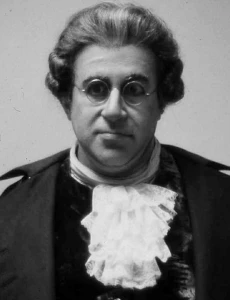
A note on sourcing: Dara (1938–2017) was, like his contemporary Paolo Montarsolo, a specialist Italian basso-buffo — a master of Rossini and Donizetti comic repertoire rather than a stadium-filling crossover superstar in the Pavarotti or Three Tenors mold. He never performed arena pop concerts or ran a personal charitable foundation. Per the user's direction, the essay's "mass audience" and "crossover" sections have been adapted honestly to his real, well-documented history: his central role in the historic 1984 Pesaro rediscovery of Rossini's Il viaggio a Reims, his years of nationally and internationally televised Metropolitan Opera broadcasts alongside Luciano Pavarotti and Kathleen Battle, and his later career as a stage director and mentor — rather than inventing pop collaborations or philanthropic campaigns that did not occur. All facts below (dates, roles, casts, venues) are drawn from verified sources including Wikipedia, OperaWire, Gramilano, Opera-Arias.com, OperaOnVideo.com, and the Rossini Opera Festival's own archive.
On the evening of August 18, 1984, in the open-sided Auditorium Pedrotti in Pesaro, the small Adriatic city where Gioachino Rossini had been born nearly two centuries before, an audience of scholars, critics, aristocratic bel canto devotees, and ordinary opera pilgrims settled into their seats beneath a sky still holding the last violet light of an Italian summer evening. What they were about to witness had, in the strictest sense, never happened before in living memory: the modern resurrection of Il viaggio a Reims, a Rossini opera composed in 1825 for the coronation of Charles X of France, performed a handful of times, and then vanished so completely from the repertoire that for over a century and a half musicologists debated whether the score itself had survived. It had — scattered across archives in Paris, Vatican City, and the personal collections of Rossini's heirs, painstakingly reassembled by the scholar Philip Gossett into a critical edition that made this night possible. Claudio Abbado stood at the podium before the Chamber Orchestra of Europe, having devoted himself with near-evangelical fervor to proving that Rossini's late style was not the frivolous confectionery history had dismissed it as, but architecture of dazzling structural sophistication. Luca Ronconi's staging, designed by Gae Aulenti, assembled onstage an ensemble so laden with vocal talent — Katia Ricciarelli, Lucia Valentini-Terrani, Lella Cuberli, Cecilia Gasdia, Francisco Araiza, Ruggero Raimondi, Samuel Ramey, Leo Nucci — that the production would be remembered as one of the single greatest assemblies of bel canto voices ever gathered on one stage.
Amid this constellation of stars stood a compact, mustachioed man of forty-five with an unmistakable comic gravity: Enzo Dara, cast as the pompous, deaf-in-one-ear German music critic Barone di Trombonok, tasked with organizing the fourteen international travelers stranded at a spa hotel on their aborted journey to the coronation. The role demanded something almost paradoxical — patrician bluster delivered with pinpoint comic diction, woven into some of the most fiendishly difficult ensemble writing Rossini ever composed, a fourteen-part vocal tapestry in which a single fumbled entrance could unravel the entire architecture. When Dara's Trombonok first strode onstage, gavel in hand, attempting to impose order on chaos with an authority that only made the chaos funnier, the audience felt the peculiar electricity of watching something simultaneously ancient and newborn. By the final ensemble, as the assembled nobility toasted the new French king in cascading, overlapping vocal lines of dizzying virtuosity, the ovation that rose from the Pedrotti's benches was not the polite appreciation of a curiosity revived for scholarly interest — it was the sound of an audience realizing, in real time, that a masterpiece had been returned to them. Deutsche Grammophon's recording of those August performances would go on to win Gramophone's Record of the Year, and the night itself would be remembered as the moment the modern Rossini renaissance found its definitive proof of concept, with Dara's Trombonok as one of its comic anchors.
To understand what Enzo Dara accomplished on that Pesaro stage, and across the four decades of performances that preceded and followed it, requires understanding the singular and unforgiving demands of the basso buffo voice — a category that asks a singer to be, essentially, two different instruments at once. It requires the resonant lower register of a true bass, capable of anchoring ensemble finales with genuine sonic weight, fused with a rhythmic and articulatory agility that borders on the percussive. Rossini's comic writing is built on sillabato — the syllable-per-note patter technique in which torrents of Italian text, often satirical, accusatory, or boastful, must be fired off at velocities that would reduce an untrained voice to a smear of consonants. The definitive proving ground for this technique is Dulcamara's entrance aria in Donizetti's L'elisir d'amore, "Udite, udite, o rustici," in which the traveling quack doctor hawks his miraculous elixir to a credulous village crowd in a torrent of pseudo-scientific boasting; Dara made this aria a signature, performing the role well over a hundred times across his career, and recordings capture a technique built not on brute speed but on what he understood as controlled percussive breath — releasing air in short, disciplined bursts from deep abdominal support so that each syllable struck with the clarity of a mallet on a drumhead rather than dissolving into blur.
Dara's road to this mastery was, notably, an unconventional one. Born in Mantua on October 13, 1938, he did not emerge from a conservatory pedigree or a family of musicians; he worked as a journalist before turning seriously to singing, studying voice with Bruno Sutti in his native city and making his professional stage debut only in 1960, as Colline in Puccini's La Bohème, in the small Adriatic town of Fano — a bass role of solemn lyricism, ironically nothing like the comic terrain that would define his career. It was not until the mid-1960s, with a galvanizing performance as Dulcamara in Reggio Emilia around 1966, followed swiftly by a celebrated Don Bartolo there in 1967, that Dara discovered the specific alchemy of voice, timing, and physical presence that would make him one of the most sought-after buffo basses of his generation. What separated his technique from mere comic mugging was his devotion to Rossini's and Donizetti's actual notation: where lesser performers interpolated shtick and vocal shortcuts to win cheap laughter, Dara insisted on singing every note as written, at tempo, trusting that the composer's own rhythmic wit — properly executed — was funnier than any interpolated business could be. Critics repeatedly singled out his "extraordinary dexterity in his coloratura, throwing off each run with nonchalance, yet imbuing each phrase with intention and meaning," a description that captures precisely the paradox at the center of his art: technical difficulty rendered so seamless it read as spontaneous wit rather than labor.
Three pillars anchor the architecture of Dara's extraordinary career, each revealing a different facet of his comic and vocal intelligence. The first and most towering is Don Bartolo in Rossini's Il Barbiere di Siviglia, a role he sang more than four hundred times across five decades, making his La Scala debut in it in 1971 under Claudio Abbado's baton and carrying it to the Royal Opera House, the Metropolitan Opera, and virtually every major house in the world. Dara's Bartolo was never a cardboard buffoon; he built the character's fury and jealousy with an actor's sense of escalating rhetoric, so that the famous aria "A un dottor della mia sorte" — a cascading torrent of threats and self-praise — landed not as vocal athletics for its own sake but as the eruption of a genuinely wounded, genuinely dangerous man convinced of his own cleverness even as the plot outmaneuvers him at every turn. The second pillar is Dulcamara in Donizetti's L'elisir d'amore, the role that first revealed his comic gifts in the mid-1960s and that he would later carry to the Metropolitan Opera opposite Luciano Pavarotti and Kathleen Battle, a charlatan-physician whose oily charm and rapid-fire salesmanship Dara rendered with an almost vaudevillian relish, balanced always by an underlying warmth that kept the character sympathetic rather than merely venal. The third is Don Magnifico in La Cenerentola, sung roughly a hundred and fifty times, in which Dara located the pathetic desperation beneath the character's greed — a father so consumed by the fear of genteel poverty that his cruelty toward his stepdaughter becomes, in Dara's hands, a study in self-deception as much as villainy.
As his career matured through the 1970s and 1980s, Dara deliberately sought out roles that demanded a heavier, more structurally exacting technique than the transparent comic patter that had made his name. His portrayal of the Barone di Trombonok in the 1984 Pesaro Viaggio a Reims — a role embedded in some of Rossini's most harmonically and rhythmically complex ensemble writing, requiring absolute precision within a fourteen-voice contrapuntal texture rather than the soloistic showmanship of a Bartolo or Dulcamara — proved that his technique could integrate into large-scale architectural music as fluently as it could carry a single comic aria. He similarly took on the title role of Donizetti's Don Pasquale, a part that skeptics might have assumed lay beyond a specialist known chiefly for scheming guardians and quack doctors, since Pasquale is not merely comic but genuinely humiliated — an aging bachelor whose late-life infatuation is cruelly exploited by those around him, demanding a register of pathos and vulnerability that pure buffo bluster cannot supply. Dara's interpretation leaned into this darker undercurrent, allowing the audience's laughter to curdle, briefly, into something closer to pity before the opera's comic resolution restored equilibrium — proof that the same technical arsenal built for uncomplicated hilarity could, when deployed with restraint, carry genuine emotional weight and silence any suggestion that his artistry began and ended with quick tongues and funny faces.
If the 1984 Viaggio a Reims proved Dara's stature within the rarefied world of bel canto scholarship, it was his sustained presence at the Metropolitan Opera across the 1980s and into the mid-1990s — fifty-nine performances over thirteen years — that carried his art to an audience many orders of magnitude larger than any opera house could physically hold. Central to this was the Met's "Live from the Met" and "Great Performances" broadcast partnership with PBS, which transmitted full productions into American living rooms and, through the European Broadcasting Union, into millions of households worldwide. Among the most beloved of these telecasts was a production of L'elisir d'amore pairing Dara's Dulcamara with Luciano Pavarotti's Nemorino and Kathleen Battle's Adina, conducted by James Levine in John Copley's classic staging — a broadcast that introduced an ocean of viewers who had never set foot in an opera house to the specific comic chemistry Dara had spent thirty years perfecting on Italian provincial stages. Unlike a live performance at La Scala or Covent Garden, where subtlety of expression dissolves into distance from the fourth balcony, the television camera delivered Dara's every calculated smirk, every widening of the eyes at Dulcamara's own outrageous sales pitch, directly into the viewer's field of vision, translating decades of stagecraft honed for a live house into an intimacy the medium itself demanded.
The cultural significance of this exposure extended further still. In the year 2000, Dara appeared in a Tosca staged in Rome with Pavarotti as Cavaradossi and Plácido Domingo on the podium, a production broadcast to a global audience in the tradition of the outdoor mega-events — Domingo and Pavarotti's Baths of Caracalla and Three Tenors telecasts — that had, over the preceding decade, transformed opera from a niche art patronized by an initiated elite into an occasional but genuine mass-media phenomenon. That a character bass whose entire craft depended on the precision of comic timing rather than star-tenor glamour could hold his own, and register clearly, within productions engineered for audiences of tens of millions, testified to something Dara understood instinctively: that comic truth, rendered with sufficient technical rigor, does not require the cultivated ear of a subscription-holder to land. A viewer who had never heard of sillabato or bel canto ornamentation could still laugh, immediately and involuntarily, at Dulcamara's shameless bluster or Bartolo's apoplectic fury, because the comedy Dara built was rooted in universal human folly rather than in coded operatic convention. In this way, without ever staging a stadium concert of his own, Dara became one of the quiet but essential agents by which opera's most insular comic tradition reached a public that television, rather than the opera house's marble staircase, had made newly and permanently accessible.
Dara's career was not built on crossing into popular music or founding a charitable institution bearing his name, and any honest account of his legacy must resist the temptation to manufacture such episodes where the historical record offers none. What his career does offer, in genuine and well-documented abundance, is a different and no less meaningful form of crossing: a willingness to place his exacting, old-world comic technique alongside artists whose own careers straddled boundaries that purists of his generation still policed jealously. His Metropolitan Opera partnership with Kathleen Battle placed him at the side of a soprano equally celebrated for her operatic coloratura and for Grammy-winning recordings of American spirituals — an artist whose own crossover into gospel and popular idiom drew sniffs from some corners of the classical establishment even as it drew new listeners toward opera itself. Dara's willingness to share the stage, and the television frame, with singers actively expanding opera's audience beyond its traditional boundaries — Battle, Pavarotti, and later the young Cecilia Bartoli, whose theatrical vivacity and media savvy would themselves prove controversial among traditionalists — placed him implicitly on the side of expansion rather than gatekeeping, even as his own repertoire remained resolutely, proudly classical.
That same instinct toward generosity found its more concrete expression as Dara's performing career wound down through the 1990s. Rather than retreating from the stage entirely, he turned increasingly toward directing opera productions himself, applying the same forensic attention to comic timing and ensemble precision that had defined his singing to the training of younger casts who would carry buffo technique into the twenty-first century. In 1994 he published Anche il buffo nel suo piccolo — roughly, "Even the Comic Bass, in His Own Small Way" — a memoir whose wry, self-deprecating title itself embodies the modesty with which Dara regarded a career that had, in fact, reshaped the standard for his voice type. He was honored in 1992 with the Donizetti Prize, a recognition specifically tied to his decades of service to a composer whose comic masterpieces he had done as much as any singer of his generation to keep vital and technically honest on the world's stages. If Dara's philanthropy was not measured in foundations or stadium benefit concerts, it was measured instead in the currency his art form actually runs on: the patient transmission of an endangered technical inheritance to the singers who would need it next.
Today, Enzo Dara's recorded legacy — more than four hundred performances of Don Bartolo alone, a hundred-plus Dulcamaras, a hundred and fifty Don Magnificos, and the irreplaceable document of his Trombonok on the 1984 Pesaro Viaggio a Reims recording that won Gramophone's Record of the Year — functions as precisely the kind of intimidating pedagogical benchmark that every serious student of Italian comic bass repertoire must eventually confront. Conservatory singers preparing Bartolo's tongue-twisting fury or Dulcamara's shameless patter do not merely learn the notes; they measure their diction, their breath discipline, and above all their comic restraint against a standard Dara set across recordings spanning three decades and dozens of the world's most demanding houses. His example teaches an uncomfortable lesson to any singer tempted toward shortcuts: that the funniest comedy is the comedy sung exactly as the composer wrote it, at the tempo the composer intended, without interpolated business to paper over technical insufficiency. In this way his discography operates simultaneously as instruction manual and as a standing rebuke to any pretender who would substitute mugging for mastery.
Beyond the conservatory, Dara's sustained presence in the Metropolitan Opera's television broadcasts, alongside Pavarotti and Battle, quietly helped establish the template that today's audiences take for granted: the cinema simulcast, the streaming archive, the recorded video document that allows a performance given once, on one night, in one house, to be studied and enjoyed indefinitely by viewers who will never travel to Lincoln Center or the Adriatic coast of Pesaro. He belonged to a generation of singers who understood, well ahead of the industry's full embrace of the fact, that the camera and the broadcast signal were not diminishments of opera's live magic but multipliers of its reach — carrying a craft honed in provincial Italian theatres in the 1960s to television sets across continents by the 1990s, and from there, inevitably, to the digital archives where his performances now live permanently accessible to anyone curious enough to look.
What, in the end, did Enzo Dara give to the world that watched him? He gave proof that laughter, rigorously earned, is among the highest achievements available to a performing artist — not a lesser cousin of tragedy but its equal partner in illuminating the human condition. In Bartolo's apoplectic self-regard, in Dulcamara's magnificent shamelessness, in Don Magnifico's desperate grasping and Don Pasquale's late, foolish, heartbreaking hope, Dara located not caricature but recognizable humanity, rendered legible through a technique so disciplined that its difficulty disappeared entirely into the illusion of spontaneous delight. He proved, across a career that carried a journalist-turned-singer from provincial Fano to La Scala, Covent Garden, the Metropolitan Opera, and the rediscovered stages of Pesaro, that comic genius demands no less rigor than tragic genius, and very often more, since the audience must never once glimpse the labor beneath the laughter. Long after the specific pitches of his patter have faded, that insight endures in every recording, every broadcast, every conservatory studio where a young bass wrestles with Rossini's impossible syllables and reaches, inevitably, for Dara's example — an immortal argument, delivered with impeccable comic timing, that to make the world laugh with total honesty is itself a form of grace.


