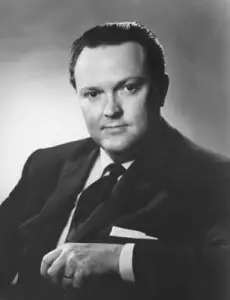
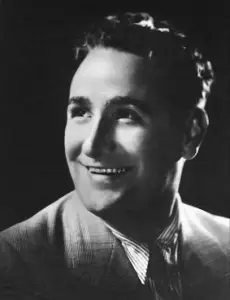
The lights of Teatro alla Scala dim in stages, the way a held breath dims before release, and in the gilded dark of Milan's most sacred auditorium, a silence settles that is unlike ordinary silence — it is the silence of collective anticipation, thousands of bodies leaning almost imperceptibly forward, the red velvet seats creaking under the weight of expectation. It is the early 1970s, and the house is packed for a new production of Verdi's Simon Boccanegra, led by a young and fiercely intellectual Claudio Abbado, staged with a severity and psychological depth that had scandalized as many traditionalists as it had electrified the progressives. Somewhere beneath the stage, in the wings thick with the smell of greasepaint and rosin, a broad-shouldered man from Trieste stands motionless, running through the architecture of the evening's phrases in his mind one final time. He does not pace. He does not fidget. Piero Cappuccilli's calm before a performance was already, by this point in his career, a kind of legend in itself — colleagues would later recall that he seemed less like a man about to sing and more like an athlete in the final seconds before a dive, entirely present, entirely economical with his nervous energy.
When he steps into the light as the doge Simon Boccanegra, something shifts in the room's molecular structure. The voice that emerges is not merely loud — La Scala has heard loud voices before, and forgotten most of them by morning — it is a voice of impossible evenness, a column of burnished bronze sound that seems to rise from the floor of the theater itself rather than from a human chest. In the council chamber scene, when Boccanegra pleads for peace between the warring factions of Genoa, Cappuccilli spins a phrase of such unbroken legato, such seamless connection from note to note, that experienced listeners in the stalls would later swear they could not locate the moment he took a breath. The audience does not merely applaud when the curtain falls on that scene — it erupts, a sound described by critics present that night as closer to a detonation than an ovation, feet stamping against the marble floors, decades of Milanese operatic connoisseurship suspending its famous skepticism in favor of pure, helpless acclamation. In that single sustained arc of sound, Cappuccilli did not simply perform a role; he re-consecrated a lineage. He announced, in the most unmistakable terms a theater can offer, that the golden age of the Verdi baritone — the age of Battistini, of Ruffo, of Gobbi — had not ended. It had merely been waiting, patiently, for him.
To understand why that night at La Scala detonated as it did, one must understand the extraordinary physiological and technical apparatus that Cappuccilli had spent a lifetime constructing, largely through relentless self-scrutiny rather than institutional pedigree. Unlike many of his contemporaries who passed through the formal conservatory system, Cappuccilli's early training was comparatively modest, rooted in Trieste and refined through what can only be described as an almost monastic devotion to the mechanics of breath. The cornerstone of his artistry — the single technical achievement for which vocal pedagogues still study his recordings today — was his command of appoggio, the Italian bel canto principle of "leaning" the breath against a stable, low diaphragmatic support so that the vocal cords themselves are never forced to bear the burden of volume or projection. Where lesser baritones relied on sheer thoracic pressure to fill a fifteen-hundred-seat house, Cappuccilli achieved the same acoustic result — and often a far more voluminous one — through an almost frictionless efficiency of airflow, allowing the sound to ride atop the breath rather than fight against it.
This technical foundation produced what became his signature: phrases of breathtaking length sustained without any audible replenishment of air, a skill that singers and voice teachers refer to admiringly, and somewhat enviously, as extraordinary fiato. In famous passages — the great confrontation with King Filippo in Don Carlo, the anguished paternal outburst of Rigoletto, the political fervor of Nabucco — Cappuccilli would routinely spin melodic lines across bar after bar of Verdi's demanding tessitura without the telltale gasp that betrays a singer running short of reserve. This was not merely a parlor trick of lung capacity; it was the physical manifestation of an interpretive philosophy. By refusing to break Verdi's long melodic architecture into smaller, more manageable fragments, Cappuccilli preserved the emotional continuity the composer had embedded in the phrase itself — a rising line of paternal grief, for instance, was allowed to rise uninterrupted, so that the listener experienced the emotion as a single unbroken wave rather than a series of vocal punctuation marks. His technique also included a scrupulous evenness of registration, the seamless blending of chest voice into the passaggio without the register break, or "gear shift," that afflicts less disciplined instruments — a smoothness achieved through years of humming exercises, careful vowel modification, and an almost scientific patience with his own instrument that colleagues found by turns inspiring and slightly intimidating.
Cappuccilli's relationship with his repertoire was never a matter of appetite but of architecture — he approached each role as a structure to be inhabited slowly, deliberately, with an almost scholarly reverence for what Verdi had actually written rather than what tradition had accumulated on top of it. His early defining triumphs came in what might be called the lyric-heroic Verdi baritone roles: Giorgio Germont in La Traviata, whose confrontation with Violetta demands not thunder but a devastating, controlled tenderness, and Rodrigo, the Marquis of Posa, in Don Carlo, a role Cappuccilli made unmistakably his own through his handling of the death scene, where his famous long-breathed phrasing transformed Posa's final farewell into one of the most quietly devastating moments in the Verdi canon — critics of the era frequently singled out his capacity to make heroic nobility sound like intimate confession rather than public declamation. In these years, his artistry was defined above all by pacing: an unwillingness to spend his considerable vocal capital too early in an opera, husbanding intensity so that the emotional peaks — Posa's death, Germont's plea — arrived with maximal, devastating impact rather than being diluted by indiscriminate power throughout the evening.
As his career matured through the 1970s and into the 1980s, Cappuccilli deliberately migrated toward the darker, more dramatically punishing roles of the Verdi canon that skeptics believed might strain even his formidable instrument. His Nabucco, the mad Babylonian king humbled by divine wrath, required a coarser, more volcanic sound than his earlier lyricism had suggested he possessed, and his interpretation — heavy with anguish in the famous prayer scene — silenced doubters who had assumed his voice too refined for such raw theatrical violence. Even more audacious was his sustained engagement with the title role of Macbeth, an opera Verdi himself insisted required "no beautiful voice" but rather a singer willing to sacrifice conventional vocal beauty for dramatic truth; Cappuccilli's willingness to darken, roughen, and psychologically distort his famously polished tone in service of Macbeth's disintegration demonstrated an artist unafraid to spend his hard-won technical capital in pursuit of theatrical honesty rather than mere vocal display. His Iago in Otello, meanwhile, revealed yet another register of his artistry: a chilling, conversational malevolence built not on volume but on an almost whispered, insinuating legato that made Iago's "Credo" a masterclass in controlled menace rather than melodramatic villainy. Across these three eras — the noble lyricism of his youth, the volcanic authority of his middle years, and the psychologically shaded darkness of his late Verdi portrayals — Cappuccilli demonstrated an evolutionary intelligence rare among singers: rather than simply aging into heavier repertoire as the voice inevitably changed, he seemed to anticipate and architect that transformation, treating his own instrument as a long-term interpretive project rather than a fixed asset to be exploited until its inevitable decline.
Opera in postwar Italy still carried, for much of the general public, the aura of an aristocratic ritual — a rarefied entertainment for the initiated few, conducted in a language of allusion and tradition that could feel forbidding to anyone outside the loggione's inner circle of connoisseurs. Cappuccilli, without ever compromising the severity of his artistic standards, became one of the crucial figures who widened that circle dramatically, largely through his deep and sustained association with the open-air Arena di Verona, the Roman amphitheater that each summer transforms opera from a chamber ritual into a genuinely mass public spectacle. Singing to audiences of fifteen thousand or more beneath the open sky, Cappuccilli faced an acoustic and psychological challenge utterly unlike the gilded intimacy of La Scala: here, his celebrated breath control and evenness of tone were not merely aesthetic virtues but practical necessities, the only means by which a single unamplified human voice could carry Verdi's full emotional weight across a vast stone bowl to spectators seated hundreds of feet away, many of them tourists and first-time operagoers rather than seasoned connoisseurs. That he could do so, filling that enormous space with the same textural nuance and legato subtlety audible in a five-hundred-seat theater, became itself a kind of populist argument: that great singing did not require the shrinking of ambition to fit a mass audience, but rather the opposite — an audience could be elevated to meet the full scale of the art.
This democratizing instinct extended into the era of broadcast media, as Italian state television and international recording labels began capturing and distributing complete opera performances to audiences who might never set foot in a major theater. Cappuccilli's numerous studio recordings for Decca and Deutsche Grammophon, alongside televised RAI broadcasts of his Scala and Verona performances, brought his voice into homes far removed from Milan's cultural aristocracy, allowing factory workers in Turin and schoolchildren in Palermo to encounter Verdi's Rodrigo or Nabucco with the same fidelity once reserved for subscription ticket-holders. In an era when opera risked calcifying into a museum piece, Cappuccilli's insistence on technical perfection even for the recording microphone — a notoriously unforgiving medium that flatters no imprecision — helped ensure that this newly expanded audience encountered the art form at its most persuasive and emotionally overwhelming, rather than a diminished facsimile of it.
Where several of his most famous contemporaries pursued the stadium spectacle and popular crossover projects that defined opera's global commercial explosion in the later twentieth century, Cappuccilli charted a notably different, more guarded course — and this restraint itself became a defining, almost polemical statement about the nature of his art. He remained, throughout his career, deeply skeptical of ventures that risked diluting the rigor of the bel canto tradition for the sake of broader commercial appeal, preferring instead to let the uncompromised power of Verdi sung correctly serve as its own form of populist outreach. Yet this did not translate into isolation or elitist withdrawal; rather, Cappuccilli directed his considerable public standing toward the cultivation of the next generation, devoting substantial energy in his later years to masterclasses and private instruction for young baritones, many of whom credit him with transmitting not merely technical secrets but an entire ethical framework for approaching the Verdi repertoire with humility and discipline rather than vanity.
His generosity found expression, too, in his willingness to lend his name and presence to benefit galas supporting opera houses and young-artist programs across Italy, understanding intuitively that the institutions which had shaped his own career depended on continued public and philanthropic investment to survive amid shifting cultural priorities. He was known among colleagues for a particular tenderness toward younger singers navigating the treacherous early years of a career built on an instrument as unforgiving as the human voice — offering counsel not as a distant icon but as a craftsman eager to pass along hard-earned knowledge before it could be lost. In this way, his philanthropy was less a matter of headline-grabbing celebrity gestures than of a quieter, more durable investment in the continuity of an art form he clearly understood to be perpetually vulnerable, dependent on each generation's willingness to master disciplines that grow only harder to sustain as popular culture's patience for vocal rigor diminishes.
Today, in conservatories and voice studios from Milan to Moscow to New York, the recorded legacy of Piero Cappuccilli occupies a position that can only be described as simultaneously inspirational and faintly terrifying to the young baritones who encounter it. His performances — meticulously preserved on the very recordings and broadcasts that carried his voice to a mass audience during his lifetime — now function as an almost unreachable pedagogical benchmark, the standard against which every subsequent interpretation of Rodrigo's death or Boccanegra's council chamber address is inevitably, sometimes cruelly, measured. Voice teachers play his recordings not merely as models of beautiful sound but as forensic evidence of what disciplined breath support makes technically possible, dissecting his phrases bar by bar to demonstrate a level of control that remains, decades later, a kind of Platonic ideal rather than a routinely attainable goal. In this sense, Cappuccilli's greatest pedagogical gift may be the productive intimidation his recordings instill — a reminder to every serious young singer that the outer limits of vocal technique are considerably further away than comfortable ambition alone might suggest.
Beyond pedagogy, his career quietly helped pioneer the infrastructure of modern operatic media distribution, demonstrating through the sheer commercial and artistic success of his recordings and broadcasts that a mass-produced, technologically mediated encounter with opera need not be a diminished one — an argument that paved conceptual ground for the high-definition cinema simulcasts and streaming platforms that now carry opera houses' productions to audiences across the globe in real time. And yet, for all this institutional and pedagogical legacy, what ultimately endures most vividly about Cappuccilli is something less quantifiable than technique or influence: the sheer, almost unbearable humanity that his voice was capable of conveying beneath its bronze-toned magnificence. To hear him spin the final unbroken phrase of a dying Posa, or thunder through Nabucco's mad prayer, or whisper Iago's poisonous creed, is to be reminded that the human voice, disciplined to its absolute outer edge and then placed entirely in service of feeling rather than display, remains one of the most profound instruments of empathy our species has ever devised. Piero Cappuccilli did not merely sing Verdi; he seemed, in his finest moments, to have found within Verdi's ink and paper the precise coordinates of grief, nobility, madness, and love, and to have walked, breath unbroken, directly into their center — leaving behind, for every listener fortunate enough to encounter that voice, an unshakable, immortal proof of what devoted mastery can wrest from the fragile, extraordinary architecture of a human breath.