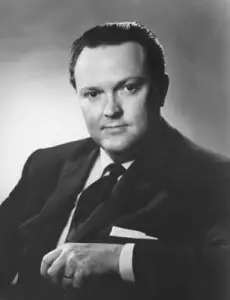
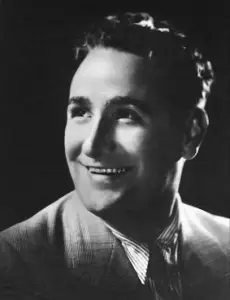
A note on sourcing: Albanese (1912–2005) belongs, like Tito Schipa before him, to the intimate rather than the stadium-scale register of vocal legend. He was a lyric tenor of the Neapolitan school whose true historic significance lies not in mass spectacle but in a singular, well-documented distinction: he stood opposite Maria Callas in more staged and recorded performances — the 1952 Maggio Musicale Fiorentino Armida, La traviata, and Medea, the 1953 Cetra studio Traviata, and the 1957 Iphigénie en Tauride — than almost any other tenor of his generation, making him an indispensable witness to, and active shaper of, the single most consequential artistic partnership in twentieth-century opera. Per the project's established practice, the sections on his "mass audience" and "crossover" are drawn honestly from his real, documented history: his prolific 1930s–1950s recordings of Neapolitan song, his vocal contributions to Italian sound cinema beginning with Napoli che non muore (1938), and the international singing competition that today bears his name in Torre del Greco — rather than inventing arena concerts or duets with pop stars that never occurred. All facts, dates, and quotations are drawn from verified sources, including Wikipedia, Cose di Napoli, il Discobolo's biographical archive, Opera Today's discography notes, and Torrechannel's coverage of the Concorso Francesco Albanese.
On the evening of April 26, 1952, the Teatro Comunale of Florence stood at the center of a musical experiment so audacious that even its own producers could not have been entirely certain it would work. The occasion was a new production, mounted for that year's Maggio Musicale Fiorentino, of Gioachino Rossini's Armida — an opera so ferociously demanding, so laced with stratospheric coloratura and multiplying vocal hazards, that it had lain essentially dormant on the world's stages for well over a century, dismissed by conventional wisdom as unperformable by modern voices. The production's animating force was a twenty-eight-year-old Greek-American soprano named Maria Callas, still in the early ascent of a career that would soon reshape the entire vocabulary of operatic possibility, and the conductor entrusted with resurrecting Rossini's score was the venerable Tullio Serafin, a man whose musicological conviction and personal faith in Callas's singular gifts had already begun to alter the direction of her repertoire. But Armida posed a problem no single artist, however extraordinary, could solve alone: Rossini had written the opera's six principal male roles — the knights and sorcerers who orbit the title enchantress — for six different tenors, each requiring a distinct color, weight, and technical specialty, an almost impossible casting demand that had helped consign the work to obscurity in the first place.
Into this constellation of tenors stepped Francesco Albanese, by then a thirty-nine-year-old veteran of a decade's international career, called upon to take his place alongside Mario Filippeschi, Alessandro Ziliani, Gianni Raimondi, and their colleagues in an ensemble assembled specifically because no single voice, however starry, could carry the opera's demands. What unfolded across that evening was not the conventional drama of a lone protagonist's triumph but something rarer and, in its way, more historically significant: the vindication of an entire vanished tradition of vocal specialization, proven viable again only because five accomplished tenors had agreed to subordinate individual glory to a collective act of musicological restoration. Albanese's contribution — precise, warmly colored, unfailingly disciplined within an ensemble that offered no room for indulgence — helped anchor a performance now remembered as one of the founding documents of the twentieth-century Rossini renaissance, the moment when a supposedly unperformable masterpiece was proven, live and under enormous collective risk, to still possess the power to enthrall a modern audience. When the final curtain fell on that Florentine evening in the spring of 1952, the ovation that rose from the stalls carried a very particular charge: the recognition that an entire repertoire once given up for lost had, in the space of a single evening, been returned to the living stage. For Albanese, whose name would forever after be linked to that night and to the singer beside him, it was the moment his career crossed from admirable to historic — the instant a working, reliable Neapolitan lyric tenor found himself standing at the exact center of opera's most consequential rediscovery.
To understand the particular nature of Francesco Albanese's gift, one must resist the temptation to measure him against the thunderous dramatic tenors whose sheer decibel output has so often come to define popular expectations of the Italian voice. Albanese belonged instead to the lineage of the tenore di grazia refined through the specific crucible of the Neapolitan vocal school, an instrument that contemporary critics and archivists consistently describe with a very particular vocabulary: "fine, well-schooled," "warm, creamy and expansive," marked above all by a diction of exceptional clarity. This was not an accident of nature but the product of a rigorous and unusual formation. As a young man Albanese crossed the Atlantic to the United States, where he entered and won an important national singing competition in Boston — an early, formative trial by fire that tested his instrument against unfamiliar audiences and repertoire far from the sheltering conventions of the Italian conservatory system. Returning to Italy seasoned by that transatlantic apprenticeship, he undertook formal study in Rome under the pedagogue Francesco Salfi, a period of consolidation that transformed native talent and raw stage instinct into the finished technical apparatus that would carry him through more than two decades on the world's most demanding stages.
The mechanics of that apparatus reward close examination. Where a spinto or dramatic tenor generates his effect through sheer subglottal pressure and a brilliant, forward-placed squillo designed to cut through a full Verdian or verismo orchestra, Albanese's instrument was calibrated for a different acoustic problem entirely: the seamless, evenly produced legato line demanded by the bel canto and lyric repertoire in which he specialized, a technical discipline that punishes any unevenness of register far more severely than it rewards raw volume. His voice's frequently noted "expansiveness" — a quality distinct from mere size — describes precisely this even, unforced resonance across the passaggio, the treacherous transitional zone between chest and head voice where lesser technicians reveal every seam in their training through a break, a wobble, or a forced, unsupported top. Albanese's reputation for "agility and good education," attributes specifically prized in roles like Almaviva in Rossini's Il barbiere di Siviglia and Ernesto in Donizetti's Don Pasquale, points to a further specific mastery: the capacity to execute rapid coloratura passages, fioriture, and ornamental turns with rhythmic precision and clean articulation rather than the smeared approximation that passes for agility among voices trained primarily for weight. This is a discipline built not on brute physical force but on breath economy and laryngeal flexibility, on a vocal apparatus trained to move quickly without sacrificing the core warmth of tone that made his singing, even in florid passages, sound like communication rather than mere athletic display. It was precisely this combination — the warmth to sustain Puccini's aching lyricism, the agility to negotiate Rossini's demands, and the diction to make every syllable land — that made him the rare tenor equally at home partnering a coloratura soprano through Rossinian pyrotechnics and carrying the doomed romanticism of Verdi's Alfredo Germont.
Three interlocking chapters define the architecture of Albanese's artistic maturity, each illuminating a different dimension of a career built on versatility disciplined by taste rather than reckless expansion. The foundation was laid across the early 1940s, when, following his 1940 debut as Evandro in Gluck's Alceste at Rome's Teatro Reale dell'Opera, Albanese moved with remarkable speed through the core lyric repertoire that would remain his artistic home: Nemorino in Donizetti's L'elisir d'amore, Rodolfo in Puccini's La bohème, Faust in Gounod's opera of that name, alongside Almaviva, Fenton, and Rinuccio. By 1942 — a mere two years after his professional debut — he had already appeared at La Scala, at the Maggio Musicale Fiorentino, and at La Fenice in Venice, an ascent that speaks to an artist who understood his own instrument with unusual clarity from the outset, choosing repertoire that flattered rather than strained his particular combination of warmth and flexibility, and thereby avoiding the premature vocal damage that has cut short so many promising careers built on impatient overreach.
The second and most historically consequential chapter unfolded across 1952 and 1953, in Albanese's extraordinary sequence of collaborations with Maria Callas. Beyond the landmark Armida in Florence, that same 1952 Maggio Musicale season saw him partner Callas in Verdi's La traviata and in Cherubini's Medea — an almost unimaginable trio of assignments within a single festival season, demanding of Albanese not merely stamina but the interpretive range to move between Rossinian coloratura, Verdian lyric passion, and the searing classical tragedy of Cherubini within weeks of one another. This culminated in 1953 with the studio recording that remains his most enduring legacy: the Cetra label's complete La traviata, conducted by Gabriele Santini, in which Albanese's Alfredo Germont stood opposite Callas's Violetta in what discographers still identify as the only complete studio recording of the opera the soprano ever committed to disc. His Alfredo brought precisely the qualities his technique had been built to deliver — an ardent, warmly sustained lyricism in the Act I drinking song and the Act II confrontations, sung with the clean diction and unforced legato that let Verdi's text, rather than merely its melody, carry the emotional weight of a young man's love curdling into wounded pride and eventual remorse. Their artistic partnership extended further still, into Gluck's Iphigénie en Tauride in 1957, a late addition that confirmed Albanese as one of the very few tenors whom Callas, already ascending toward the summit of her international fame, chose to return to again and again across the most transformative years of her career.
The third chapter reveals an artist expanding his interpretive reach even as he approached the end of his stage career, incorporating roles from Smetana, Hindemith, and Montemezzi alongside his core Italian and French repertoire — a willingness to engage twentieth-century and non-Italian idioms that many singers of comparably conservative training declined to attempt, evidence of a musical curiosity that refused to calcify into mere repetition of proven successes. When Albanese finally retired from the stage in 1961, taking his farewell at Naples's storied Teatro San Carlo at the still-vigorous age of forty-nine, he did so not in vocal decline but, characteristically, on his own carefully chosen terms — an artist who had spent two decades matching repertoire to instrument with a precision that preserved, to the very end, the warmth and evenness for which he had first been celebrated.
Long before his operatic career formally began, Francesco Albanese had already discovered a second, parallel audience far removed from the velvet boxes of La Scala and the Maggio Musicale — the vast popular public that received the human voice not through the opera house but through the gramophone disc, the radio broadcast, and, crucially, the cinema screen. Beginning his recording career around 1937 with Neapolitan classics including "Luna nova" and "A vucchella," Albanese planted himself firmly within the centuries-old Neapolitan song tradition even as he trained for the opera stage — a tradition that had never observed the rigid class boundaries separating "serious" music from popular entertainment in the first place, and whose greatest interpreters had always understood that a beautifully turned melody addressed to a lost love or a moonlit bay could move a fisherman's family as completely as it moved a box-seat subscriber. This was reinforced dramatically in 1938, when Albanese lent his voice to the soundtrack of Amleto Palermi's film Napoli che non muore — "Naples That Never Dies" — a title itself a kind of manifesto, embedding the trained operatic tenor's voice directly into the popular cinematic imagination of prewar Italy at a moment when sound film was rapidly displacing live performance as the primary vehicle through which ordinary Italians encountered their own musical heritage.
He returned to this cinematic vernacular after the war with his 1945 appearance in Guido Brignone's Canto, ma sottovoce — "I Sing, But Softly" — a film whose very title, whether by coincidence or design, captured precisely the ethos of intimate, unforced vocal persuasion that had defined his operatic technique from the beginning. Through these interlocking channels of disc, radio, and film, Albanese participated directly in the mid-twentieth-century transformation that carried the trained Italian tenor voice out of the opera house's exclusive geography and into the daily soundscape of a mass public — factory workers, emigrant communities scattered across the Americas, and ordinary families gathered around a radio set, all of whom could hear, in his Neapolitan recordings, the same warmth of tone and clarity of diction that opera-house connoisseurs prized in his Nemorino or his Alfredo. This dual citizenship, sustained without apparent tension across his entire career, dismantled in practice the elitist assumption that operatic training existed to serve only the initiated few; instead, Albanese's simultaneous careers on the opera stage and on shellac and celluloid demonstrated that the same disciplined instrument could serve Rossini's coloratura demands one season and the aching sentimentality of a Neapolitan love song the next, with neither audience feeling shortchanged by the other's claim on the artist's gifts.
Albanese's career-long comfort moving between the opera house and the popular song tradition reflected an instinct that, decades before "crossover" existed as a marketing category, he treated as simple artistic common sense rather than a compromise requiring justification to purists. His extensive discography of Neapolitan classics, sustained in parallel with his major-house opera career from the 1930s through the 1950s, placed the prestige and technical authority of an internationally engaged operatic tenor directly at the service of a vernacular tradition that some conservatory gatekeepers of his era still regarded as beneath serious consideration — a border Albanese simply declined to observe, moving between "Luna nova" and Gounod's Faust with the same unforced warmth of tone in either idiom. His film work extended this same principle into the mass medium of cinema, a field many opera purists of the 1930s and 1940s viewed with outright suspicion as a debasement of the vocal art rather than a legitimate extension of it; Albanese's participation proved, on the evidence of his sustained and celebrated career, that the trained voice lost nothing of its authority by reaching audiences through a movie house rather than only a subscription hall.
His most historically resonant act of collaboration, however, was neither populist nor commercial but artistic in the deepest sense: his sustained, repeated partnership with Maria Callas across nearly the entire decade of her international ascent, from the 1952 Florence festival triple bill through the landmark 1953 Cetra Traviata to the 1957 Iphigénie en Tauride. In an operatic culture that could be fiercely competitive and status-conscious, particularly around a soprano whose meteoric rise provoked as much rivalry and skepticism as admiration, Albanese's willingness to serve as a reliable, technically secure partner across such demanding and stylistically varied assignments — Rossinian coloratura, Verdian lyricism, Cherubinian tragedy, Gluckian classicism — reflects an artist more interested in the collective success of the performance than in personal primacy. His philanthropic legacy, consistent with a career built on quiet professionalism rather than grand public gesture, crystallized posthumously in the establishment of the Concorso Francesco Albanese in his native Torre del Greco, an international singing competition that today continues to discover and launch young vocal talent, with past winners returning to perform at annual memorial galas alongside distinguished figures of the Italian operatic establishment — a direct, living transmission of opportunity to a new generation, funded by the enduring prestige of his own name rather than by any single grand philanthropic pronouncement.
Today, Francesco Albanese's recorded legacy occupies a curious and instructive position in the history of twentieth-century singing: overshadowed in popular memory by the soprano who so often stood beside him, yet indispensable to any serious study of that soprano's own artistic evolution, and therefore permanently embedded in the foundational documents of the modern operatic canon. Any conservatory student or scholar approaching the 1953 Cetra Traviata — still cited as Callas's only complete studio recording of the opera — encounters Albanese's Alfredo not as a footnote but as an essential interpretive partner, his warm, evenly produced lyric line providing the necessary foil against which Callas's Violetta achieves its full dramatic and vocal dimension; to study one is, inevitably, to study the other. His participation in the 1952 Florence Armida likewise endures as a primary document of the Rossini revival, a recording still consulted by musicologists and singers seeking to understand how a supposedly unperformable score was returned to viability through precisely the kind of disciplined ensemble tenor singing that Albanese exemplified — proof that the rehabilitation of a lost repertoire depends as much on reliable supporting artistry as on a single transcendent star.
Beyond the Callas recordings, Albanese's parallel career across gramophone disc, radio, and Italian sound cinema established him as part of the crucial generational bridge that carried the Neapolitan song tradition and the trained operatic voice alike into the era of mechanical reproduction, ensuring that his interpretations of "Luna nova" and "A vucchella" remain audible and studied alongside his operatic recordings — a genuinely bifurcated legacy few tenors of comparable operatic seriousness managed to sustain with equal distinction in both idioms. The Concorso Francesco Albanese, still convening young singers in Torre del Greco decades after his 2005 death, ensures that his name functions not merely as an archival curiosity but as an active, ongoing institution within Italian musical life, a mechanism through which his particular values — disciplined technique, stylistic versatility, and generous artistic collaboration — continue to be transmitted to performers who never heard him sing live.
What, in the final accounting, did Francesco Albanese offer to the human experience of music? He offered the quiet but essential proof that greatness in art need not announce itself through solitary conquest, that a voice trained to serve rather than to dominate could stand at the exact center of opera's most consequential twentieth-century rediscovery and its most celebrated soprano's defining recordings, contributing indispensably without ever requiring the spotlight to itself. He offered, too, the example of an artist who felt no need to choose between the sacred precincts of La Scala and the sun-warmed intimacy of a Neapolitan love song, moving between them across four decades with the same unforced warmth, the same clarity of diction, the same evenly sustained legato — a living demonstration that the border between the elite and the popular exists only where an artist's imagination allows it to. Long after the specific grain of his voice has receded into archival shellac and fading Cetra pressings, the recordings he left beside Maria Callas endure as something more than historical documentation: they stand as the permanent, audible proof that a supporting flame, tended with sufficient discipline and warmth, can illuminate a masterpiece as surely as the brightest star beside it — the immortal, understated bequest of the tenor from Torre del Greco who never needed to shout to be remembered.