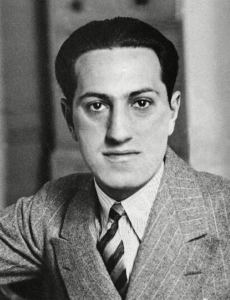

In the sweltering heat of a Charleston summer in 1934, a man in a crisp linen suit sat on the porch of a shack on Folly Island, listening. George Gershwin, the toast of Manhattan and the darling of Tin Pan Alley, was not there to vacation. He was there to soak in the "shouting," the spirituals, and the Gullah rhythms of the South Carolina coast. While his contemporaries in Europe were dismantling tonality or retreating into neoclassicism, Gershwin was engaged in a different kind of alchemy. He was attempting to synthesize the street-corner vitality of jazz with the rigorous structures of the European operatic tradition.
The result of this immersion would be Porgy and Bess, a work that would eventually be hailed as the first truly great American opera. But at that moment, sitting among the palmettos, Gershwin was an outlier. He was a songwriter who dared to be a symphonist, a populist who sought the prestige of the Metropolitan Opera. He was a man suspended between worlds—between the commercial demands of Broadway and the high-art aspirations of the concert hall. This tension, this restless searching for a unified American voice, defines the brief but incandescent career of George Gershwin.
Gershwin’s genius lay in his ability to translate the vernacular of the American experience into a sophisticated musical grammar. To understand his operatic vision, one must first look at his unique approach to orchestration. Unlike many of his American predecessors who mimicked the Wagnerian or Puccinian models, Gershwin’s orchestral palette was neon-lit and percussive. He treated the orchestra not as a monolith of sound, but as a collection of vibrant, often competing voices.
In his operatic writing, particularly in Porgy and Bess, Gershwin utilized a dense, polyphonic texture that mirrored the chaotic energy of Catfish Row. His use of the banjo in the pit, the syncopated brass stabs, and the sliding trombones brought the "blue notes" of the jazz club into the sacred space of the opera house. Yet, this was no mere pastiche. Gershwin’s harmonic language was deeply influenced by his studies with Joseph Schillinger and his admiration for Alban Berg. Beneath the catchy melodies lies a sophisticated use of bitonality and complex chromaticism.
The "Summertime" lullaby, for instance, is not merely a folk song; it is a masterpiece of atmospheric writing, where a shimmering, high-tessitura string accompaniment creates a sense of oppressive, humid heat. His use of leitmotif—from the jagged, aggressive theme of Crown to the soaring, tragic line of Bess—demonstrates a firm grasp of dramatic architecture. Gershwin didn't just write tunes; he built a soundscape that functioned as a psychological map of his characters.
Gershwin’s primary innovation was the concept of the "folk opera." He insisted that Porgy and Bess be performed by an all-Black cast of classically trained singers, a radical move in 1935. By doing so, he elevated the African American experience to the level of high tragedy, demanding that the voices of the marginalized be heard with the same gravity as the queens of Verdi or the gods of Wagner.
Dramatically, Gershwin moved away from the stilted recitative of the past. Instead, he developed a fluid, rhythmic speech-song that bridged the gap between spoken dialogue and aria. This gave his operas a cinematic momentum, a quality further enhanced by his mastery of choral writing. In Porgy and Bess, the community itself is a character. The "shouting" choruses and the prayer scenes are not decorative interludes; they are the heart of the drama, providing a collective commentary on the individual struggles of the protagonists.
He also integrated elements of the musical comedy—the "vaudeville" energy of Sportin’ Life—without sacrificing the work's operatic integrity. This synthesis of "high" and "low" culture was Gershwin’s greatest gift to the medium. He proved that opera could be accessible without being superficial, and that it could find its soul in the rhythms of the everyday.
When Gershwin burst onto the scene, the American operatic landscape was largely a colonial outpost. Composers were still trying to sound European, producing works that felt like pale imitations of Debussy or Strauss. Gershwin shattered this glass ceiling. His success with Rhapsody in Blue and An American in Paris had already prepared the public for a new kind of symphonic jazz, but his foray into opera was a seismic shift.
Initially, Porgy and Bess was met with confusion. Was it a musical? Was it a grand opera? The critics at the time, often blinded by the racial and social prejudices of the era, struggled to categorize it. However, the work’s impact on the next generation of composers was undeniable. One can trace a direct line from Gershwin to the operatic works of Leonard Bernstein, Carlisle Floyd, and even the minimalist structures of John Adams.
Gershwin validated the American vernacular. He showed that the blues scale, the Charleston rhythm, and the spiritual were not just "folk" elements to be sampled, but the very foundation upon which a new, modern operatic tradition could be built. He moved the center of gravity from the old world to the new, creating a language that was as comfortable in the streets of New York as it was in the salons of Paris.
Today, Gershwin’s relevance in the modern repertoire is more potent than ever. Porgy and Bess has finally taken its rightful place as a cornerstone of the international canon, performed on the world’s most prestigious stages from the Metropolitan Opera to the Teatro alla Scala. In the 21st century, directors have found in Gershwin’s work a powerful vehicle for exploring themes of systemic poverty, racial identity, and the resilience of the human spirit.
Modern productions often strip away the "picturesque" folk elements to reveal the raw, gritty realism at the opera's core. The role of Bess has become a proving ground for the world’s leading sopranos, requiring a voice that can navigate the shimmering legato of the arias while maintaining the raw, verismo power demanded by the character’s tragic arc. The baritone role of Porgy remains one of the most vocally and physically taxing in the repertoire, requiring a performer who can convey both immense strength and profound vulnerability.
Furthermore, Gershwin’s influence extends beyond the opera house. His ability to blur the lines between genres has become the blueprint for contemporary composition. In an age where digital fragmentation and cross-pollination are the norms, Gershwin’s "fractured" yet unified vision feels remarkably prescient. He was the architect of a specific kind of modern beauty—one born of the hustle of the city and the silence of the swamp.
George Gershwin’s life was cut tragically short at the age of 38, leaving us to wonder what other operatic heights he might have scaled. Yet, in the works he left behind, we find a complete and radical vision. He was a composer who understood that the pulse of the 20th century was not found in the textbooks of the conservatory, but in the heartbeat of the people.
His operas are not museum pieces; they are living, breathing testaments to the power of the human voice to transcend the boundaries of race, class, and tradition. In the 21st century, the "cold fire" of Gershwin’s genius continues to burn. He remains the architect of the American soul, reminding us that even in a world of machines and sorrow, the music—however syncopated, however blue—must always find its way to the light. He did not just write operas; he built a cathedral of sound where the modern spirit could finally hear its own voice, singing in its own tongue.


